
Key Takeaways:
- Material Matters: Discovering your device’s exact material is the mandatory first step before applying any soap or water.
- The Pre-Wash Rule: Washing your item before use is just as critical as post-use cleaning to maintain a healthy intimate environment.
- Drying Dangers: Improper drying and storage can lead to hidden moisture buildup, creating a breeding ground for harmful bacteria.
- Avoid Extreme Cleaning: Never use harsh household chemicals or boiling water on motorized vibrators to prevent permanent damage.
Why Proper Sex Toy Cleaning Matters?
One topic that comes up frequently in my clinical practice is how easily intimate hygiene can be overlooked. Many people ask about how to clean a sex toy correctly to ensure better hygiene and safe use.
Your vagina (the internal genital canal) naturally maintains a healthy microbiome, but that balance can be disrupted when harmful bacteria or other microorganisms are introduced.
Proper sex toy cleaning plays an important role in protecting that natural environment. A device that is not cleaned correctly may increase the risk of bacterial vaginosis, yeast infections, or the transmission of viruses such as HPV (Human Papillomavirus). I encourage my patients to think of cleaning as a simple act of self-care rather than an inconvenient chore. With the right habits, you can help protect your intimate health while extending the lifespan of your device.

Know Your Material Before Washing
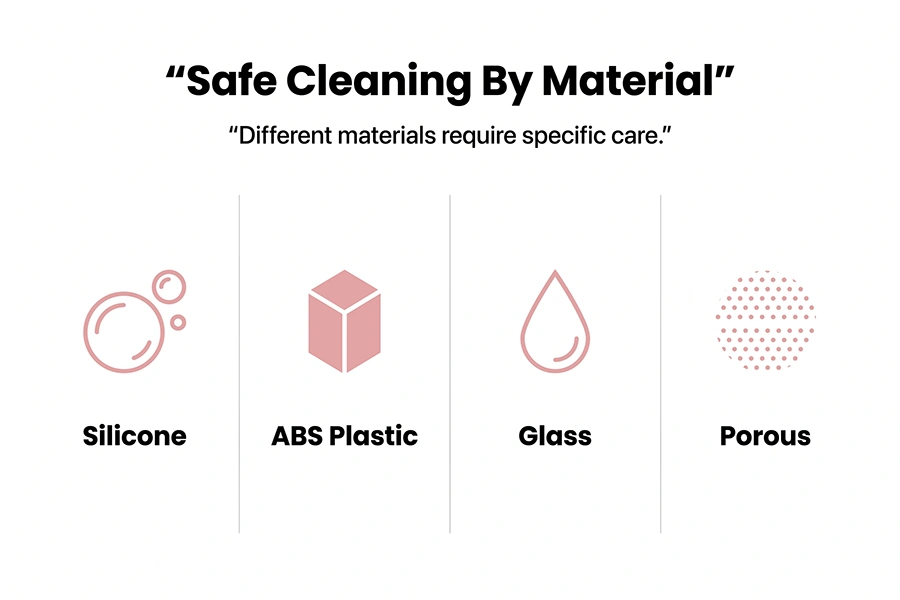
Before learning how to clean a sex toy, take a moment to identify what it is made from. Different materials respond differently to water, soap, and disinfecting methods. Using the wrong cleaning approach can damage the surface, making it more difficult to keep the device hygienic over time.
- Medical-Grade Silicone: It is non-porous, hypoallergenic, durable, and easy to clean, making it one of the safest choices for intimate use.
- ABS Plastic: A hard, non-porous plastic commonly used for the handles, bases, or outer shells of vibrators. It is simple to clean with mild soap and warm water.
- Glass and Stainless Steel: Both materials are completely non-porous, making them highly resistant to bacterial buildup.
- Porous Materials (Jelly, Rubber, TPR/TPE, and Latex): These materials contain microscopic pores that can trap moisture and microorganisms.
Step-by-Step Cleaning Methods for Every Material
The safest cleaning method depends on what your device is made of. If you’re wondering how to clean a sex toy, following the manufacturer’s instructions is always the first step. These general guidelines will also help you clean the most common materials safely.
Medical-Grade Silicone
This material is non-porous, making it one of the easiest materials to keep hygienic. If your device is fully waterproof, wash it under warm running water with a mild, unscented antibacterial soap. Gently clean around seams, buttons, and textured areas before rinsing thoroughly. Some non-motorized silicone toys can also be boiled for a few minutes to sanitize them, but only if the manufacturer confirms this method is safe.
ABS Plastic
ABS plastic is durable and non-porous, but many devices made from it contain batteries or charging ports. Unless the manufacturer states that the toy is fully waterproof, avoid submerging it. Instead, wipe the surface with a soft cloth dampened with warm, soapy water, then remove any soap residue with a second clean, damp cloth.
Glass and Stainless Steel
These two materials are completely non-porous and can usually be cleaned with warm water and mild soap. Many non-electronic models can also be sanitized by boiling or, if approved by the manufacturer, cleaned in a dishwasher. Always allow glass to cool naturally before exposing it to cold water to reduce the risk of cracking.
Porous Materials (Jelly, Rubber, TPR/TPE, and Latex)
During consultations, I often encourage women to replace older porous toys with non-porous silicone alternatives whenever possible. Porous materials contain microscopic openings that can retain moisture and microorganisms, making them impossible to sanitize completely. Wash them immediately after each use with warm water and mild soap, never boil them, and avoid sharing them with anyone, even after cleaning.
Read More: 12 Sex Toys FAQs: Answers to the Most Common Questions About Sex Toys
Crucial Hygiene Tips That Are Often Overlooked
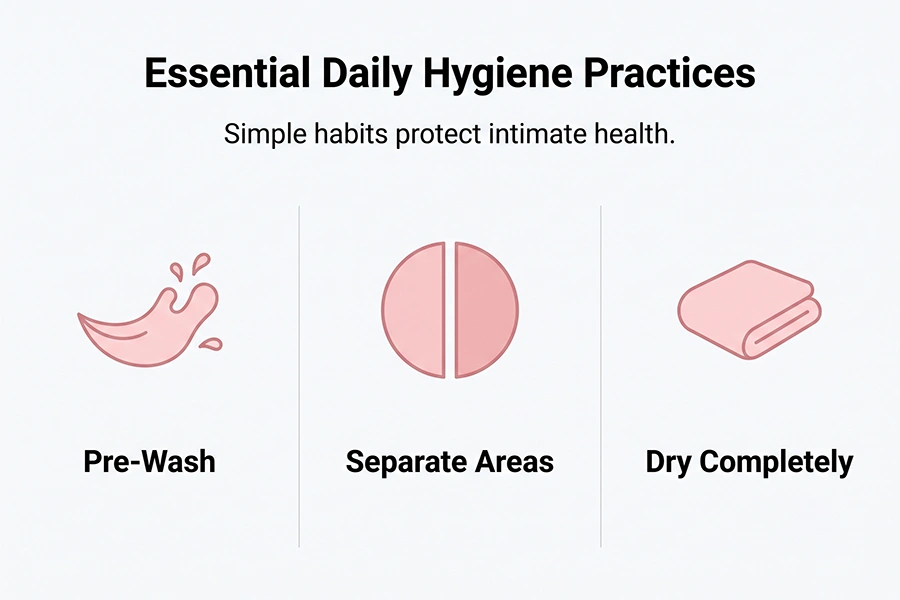
Beyond knowing how to clean a sex toy, there are a few essential hygiene practices that are often overlooked. These simple habits can help reduce the risk of infection, protect intimate health, and keep your device in the best possible condition.
Read More: Can Adult Toys Cause Infection? The Truth, Risks & How to Stay Safe
Clean Your Device Before Every Use
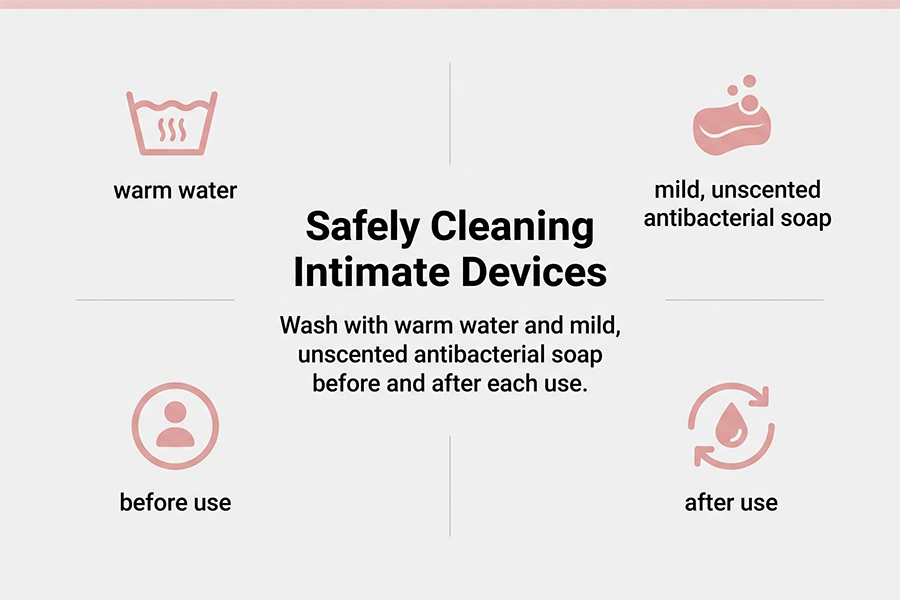
One recommendation I rarely see emphasized is cleaning your device before use—not just afterward. Even when stored in a pouch or drawer, intimate devices can collect dust, lint, or other contaminants over time. A quick wash with warm water and mild soap before each use helps protect the vulva (the external female genital area) and the vagina from unnecessary exposure to unwanted microorganisms.
Never Move a Toy Directly from the Anus to the Vagina
This is one of the most important hygiene rules I discuss with my patients. Bacteria that naturally live in the digestive tract should never be introduced into the vagina, as doing so can increase the risk of infections. If you plan to use the same toy for both areas, wash it thoroughly with warm water and mild soap before switching, or use a new condom over the toy and replace it when changing areas.
Dry and Store Your Device Correctly
Proper drying is just as important as washing. After cleaning, dry your device completely with a lint-free towel or paper towel before storing it. Keeping a damp toy in a closed container can encourage bacterial growth and shorten its lifespan. Store each device in a clean, breathable pouch away from direct sunlight and excessive heat. If you own toys made from different materials, store them separately to help prevent surface damage or material degradation over time.
Read More: How to Hide a Sex Toy from Roommates and Kids: Privacy Matters
Common Cleaning Mistakes to Avoid
One of the most common mistakes I see during consultations is that many women unintentionally damage their devices while trying to clean them. Avoiding a few simple errors can help protect both your intimate health and the lifespan of your toy.
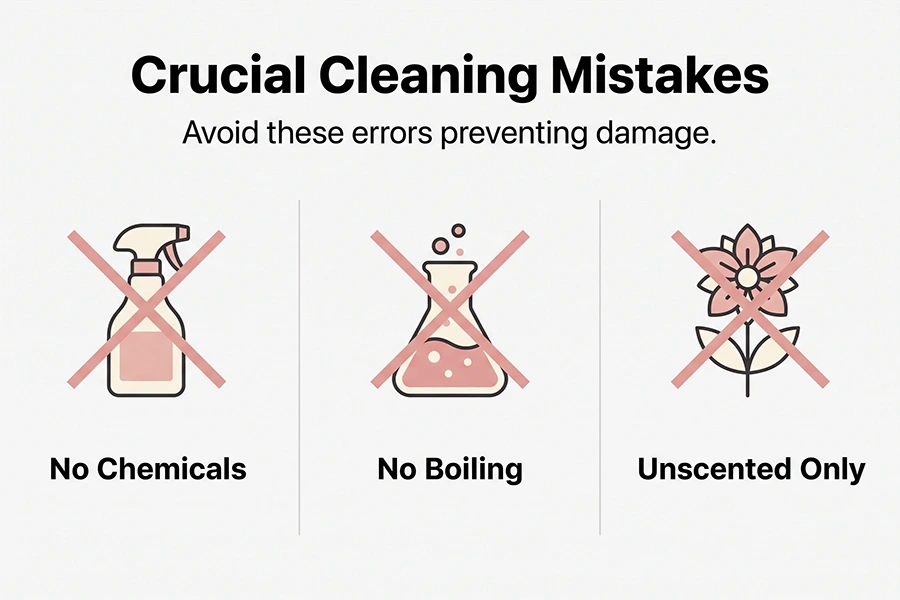
- Never use bleach, alcohol, or household surface cleaners. These products can damage the material and may irritate sensitive genital tissues if any residue remains on the device.
- Never boil a motorized vibrator. Only non-electronic toys that the manufacturer specifically identifies as boil-safe should be sanitized this way. Heat can permanently damage motors, batteries, and charging components.
- Avoid heavily scented soaps. Fragrances and unnecessary additives may leave residues that can irritate sensitive skin. A mild, unscented soap is usually the safest choice.
One habit I encourage during consultations is treating toy care as part of your regular intimate hygiene routine. Taking a few minutes to clean, dry, and store your device properly helps reduce unnecessary health risks while keeping it in good condition for longer. Small, consistent habits often make the biggest difference.
Myth vs. Fact: Do You Really Need a Specialized Toy Cleaner?
- Myth: You must use a branded toy cleaner to keep your device hygienic.
- Fact: For most non-porous materials, warm water and a mild, unscented soap are sufficient for routine cleaning. Specialized toy cleaners can be convenient for travel or quick cleaning, but they are generally a matter of preference rather than a medical necessity. Always follow the manufacturer’s care instructions for your specific device.

Final Thoughts
Learning how to clean a sex toy is about more than protecting your investment, it is an important part of caring for your intimate health. Small habits, such as cleaning your device before and after each use, storing it correctly, and following the manufacturer’s instructions, can help reduce unnecessary health risks while extending the life of your device. Your intimate wellbeing deserves the same thoughtful care as every other aspect of your health.
If you have a question about cleaning, storage, or the safest products to use, I’d love to hear from you. Feel free to share your experiences or questions in the comments below.
References: healthline passcertified
Can I put my silicone vibrator in the dishwasher?
Only if the manufacturer specifically states that it is dishwasher-safe and the toy contains no electronic components.
What should I do if my toy has a sticky residue after washing?
If the stickiness remains after thorough cleaning, it is safest to stop using the toy and consider replacing it.
Are baby wipes a safe alternative for quick cleaning?
Baby wipes can be useful for a temporary surface wipe, but they should never replace proper cleaning with warm water and mild soap. Some wipes also contain moisturizers or fragrances that may leave residue on the device, so always wash it thoroughly before and after use whenever possible.