

Key Takeaways:
- clitoral vs G spot vs A spot orgasm: The clitoris plays a central role in orgasm, while G-spot and A-spot responses involve areas whose anatomy and mechanisms are still being studied.
- G-spot and A-spot orgasms: They are not scientifically established as completely separate mechanisms, even when the sensations feel different.
- Your experience is individual: experiencing one type, several types, or a blended response does not make your body more or less normal.
Clitoral vs G spot vs A spot orgasm: Quick Comparison
The table below allow you to see the main differences in location, sensation, and clinical evidence at a single glance:
| Feature | Clitoral Orgasm | G-Spot Orgasm | A-Spot Orgasm |
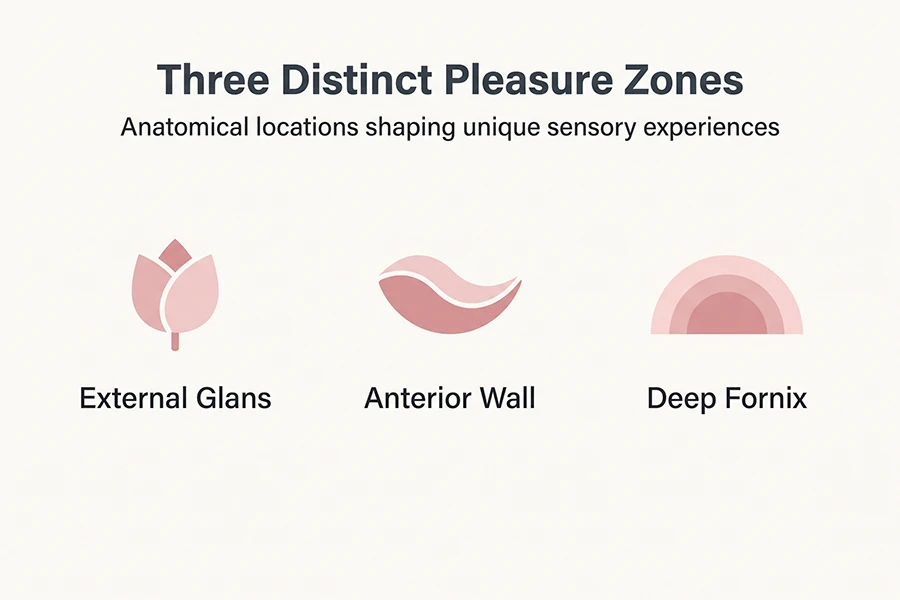
| Location | The clitoris, including its external and internal structures. | The anterior wall of the vagina (the internal canal) | Deep inside the internal canal, near the cervix |
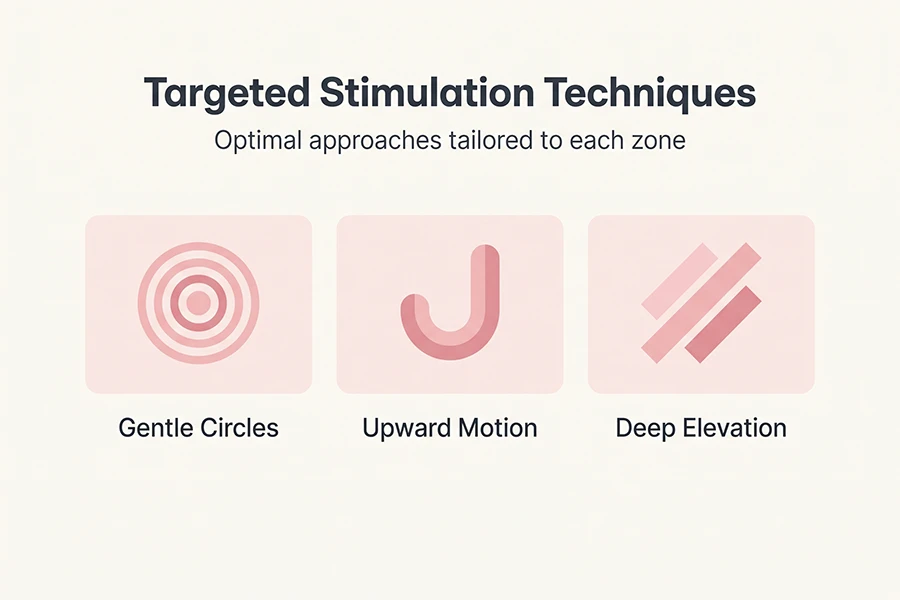
| Type of Stimulation | Direct external touch or vibration | Rhythmic pressure and upward motion | Deep, sustained, and gentle pressure |
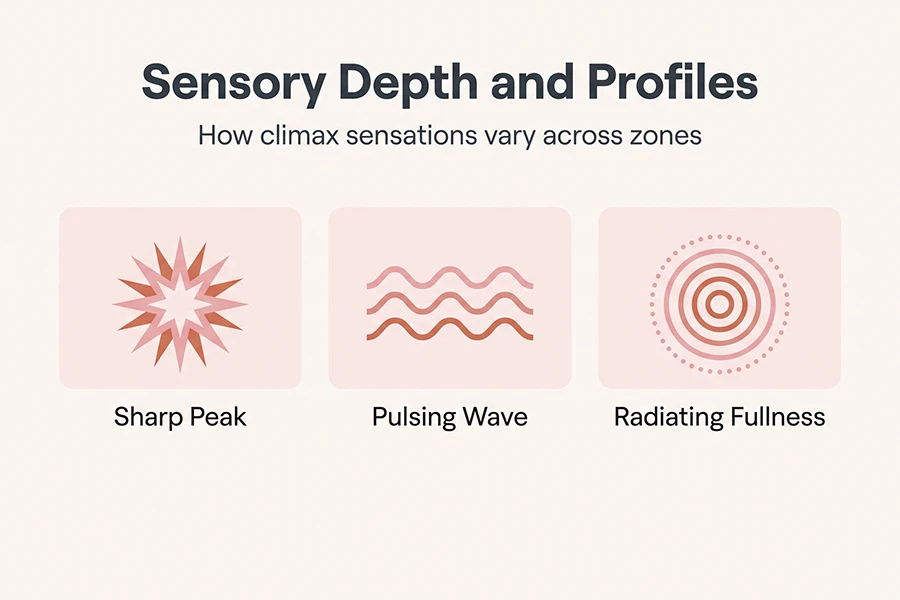
| Typical Sensations | Sensations vary considerably from person to person and may feel localized or spread through the pelvis | Some women report deeper or more diffuse sensations, but experiences vary | reports commonly describe deeper or longer-lasting sensations, although evidence is limited |
| Scientific Evidence | Strong, anatomical and physiological evidence supports the central role of the clitoris in female sexual responser | Controversial: a distinct G-spot structure has not been consistently demonstrated. | Limited: the A-spot is a proposed erogenous area, but evidence for a distinct anatomical structure or separate orgasmic mechanism is limited |
What Is a Clitoral Orgasm?
The clitoris is a highly sensitive sexual structure and plays a central role in female sexual response. Although the external part is the most visible, the clitoris extends internally and is connected with surrounding genital structures.
Read More: Clitoris Stimulation: 7 Techniques for Deeper Pleasure and Stronger Orgasms
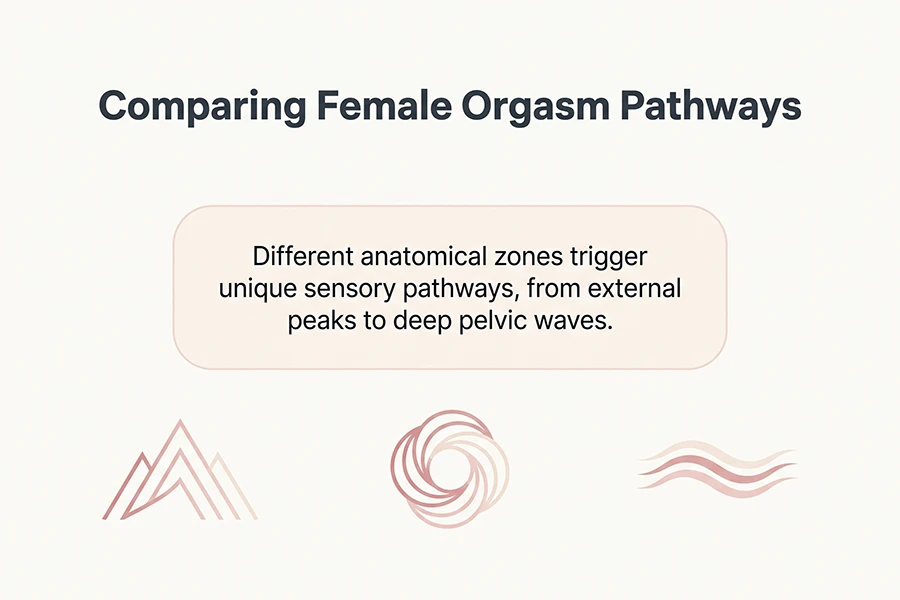
A clitoral orgasm refers broadly to an orgasm associated with stimulation of the clitoris, whether through direct touch, pressure, or vibration. The exact sensations vary from person to person, so there is no single way a clitoral orgasm should feel.
What Is a G-Spot Orgasm?
The term G-spot generally refers to a potentially sensitive area on the anterior wall of the vagina. Although it is a widely accepted concept in mainstream media, it remains controversial in the medical literature, and research has not consistently demonstrated a distinct anatomical structure called the G-spot.
Some women report pleasurable or orgasmic sensations from stimulating this region, but anatomical and imaging studies have produced conflicting findings. Current research suggests these sensations may involve the broader clitoral-urethral-vaginal complex rather than a single, separate structure.
Read More: What Is G-Spot and How to Stimulate It Safely?
What Is an A-Spot Orgasm?
The A-spot, also called the anterior fornix erogenous zone, is a proposed sensitive area located deep in the anterior vaginal fornix, closer to the cervix. Unlike the clitoris, it does not have the same level of established anatomical evidence, and research has not established the A-spot as a distinct structure or a separate mechanism of orgasm. Some descriptions associate stimulation of this region with increased lubrication or pleasurable sensations, but the available evidence remains limited.
Read More: A Spot Stimulation: 4 Essential Insights Into Deep Pleasure and Pelvic Wellness
Are Clitoral, G-Spot, and A-Spot Orgasms Really Different Types of Orgasm?
From my clinical perspective, women can experience different sensations depending on where stimulation occurs, which helps explain the clitoral vs G spot vs A spot orgasm discussion. However, current research does not support the idea that these are three completely independent physiological mechanisms. Female orgasm involves a complex interaction between genital structures, sensory nerves, pelvic floor muscles, the brain, and psychological and relational factors.
The clitoris also extends internally, and its anatomical relationships with the urethra (urine passage) and anterior vaginal wall have contributed to the concept of a clitourethrovaginal complex. This may help explain why stimulation of different genital areas can produce overlapping or different sensations. However, it would be too simplistic to say that every G-spot or A-spot response is simply an internal clitoral response. The evidence is more nuanced, and the existence of a distinct G-spot structure itself remains debated.
From My Consultation Room:
A patient once came to me feeling frustrated because she could only reach orgasm through external stimulation. She worried that her body was somehow “broken” or “basic.” We discussed the anatomy of the clitoris and how its external structures play a central role in orgasm. Understanding that her experience was within the normal range helped ease her concerns and allowed her to feel more comfortable with her body.
How Do Clitoral, G-Spot, and A-Spot Orgasms Feel Different?
There is no universal sensation that defines a clitoral vs G spot vs A spot orgasm. The experience can vary considerably between women and even for the same person at different times. Where stimulation occurs may influence the sensations you notice, but so can pelvic floor contractions, arousal, emotional state, and interactions between different genital structures and sensory pathways.
- Clitoral stimulation: Some women describe the sensation as more focused or localized, although it can also spread beyond the clitoral area.
- Anterior vaginal stimulation: Some women report deeper or more diffuse sensations, but these experiences do not establish a separate physiological type of orgasm.
- Deeper stimulation near the anterior fornix: Some women report different or more prolonged sensations, but evidence about a distinct A-spot mechanism remains limited.
The important point is that these descriptions are individual experiences, not diagnostic criteria. You do not need to experience a particular sensation for your orgasm to be considered normal.
Can You Have More Than One Type at the Same Time?
Yes. Some women experience orgasm while more than one area is being stimulated, and they may describe the resulting experience as a blended orgasm. This does not necessarily mean that several scientifically distinct types of orgasm are occurring at once. Rather, stimulation of different genital structures can overlap, while the brain, sensory nerves, and pelvic floor muscles work together as part of the overall sexual response.
What Is a Blended Orgasm?
A blended orgasm generally refers to an experience involving simultaneous or closely combined stimulation of different areas, such as the clitoris and the vagina. For some women, combining different forms of stimulation may feel more comfortable or pleasurable than focusing on one area alone. For others, it may make little difference.
Which Type of Orgasm Is Easier to Achieve?
There is no universally easiest type of orgasm, because sexual response varies from one woman to another. However, In the clitoral vs G spot vs A spot orgasm discussion, research suggests that many women benefit from clitoral stimulation, either on its own or alongside other forms of stimulation. In one large study, only about 18% of women reported that penetration alone was sufficient for orgasm, while about 36% said that clitoral stimulation was necessary during intercourse (PubMed 28678639).
I always emphasize that there is no hierarchy here. Having an orgasm associated with internal stimulation does not make you more “advanced,” and preferring external clitoral stimulation does not mean that anything is missing. The most relevant question is not which type is supposedly better, but which forms of stimulation feel comfortable and pleasurable for your own body.
Finding What Feels Best for You
Understanding what feels best for your body usually takes patience rather than a specific technique or goal. Pay attention to comfort, arousal, pressure, and the types of stimulation you naturally respond to, without treating orgasm as a test that you have to pass.

A relaxed environment can also make it easier to notice your body’s responses. Mindfulness, slow breathing, and consciously relaxing the pelvic floor may help reduce tension for some women. Most importantly, there is no need to train your body to respond to a particular “spot.” Your own pattern of comfort and pleasure is a more useful guide than trying to achieve an orgasm that is supposed to feel a certain way.
What If You Can’t Have a G-Spot or A-Spot Orgasm?
If you do not experience orgasm from G-spot or A-spot stimulation, there is no reason to assume something is wrong with your body. The clitoral vs G spot vs A spot orgasm discussion involves different patterns of stimulation, but none has been established as a required or superior pathway to orgasm. The existence of a distinct G-spot structure or separate A-spot orgasmic mechanism also remains scientifically uncertain.
If you enjoy other forms of stimulation, there is no medical reason to force yourself to achieve a particular type of orgasm. However, if you are experiencing a persistent change in sexual response, pain, distress, or difficulty reaching orgasm that bothers you, it is worth discussing the issue with a qualified healthcare professional. Factors such as medications, hormonal changes, pelvic floor problems, stress, and relationship or psychological factors can all affect sexual response.
Final Thoughts
Understanding the differences between a clitoral vs g spot vs a spot orgasm can help you better understand your body without feeling pressured to achieve a specific type of orgasm. People experience different sensations from different forms of stimulation, and science does not consider one pathway better or more important than another.
If you have any thoughts, experiences, or questions, I would love for you to share them with me in the comments below.
References: nih pubmed cosmopolitan
Does not feeling anything at my G-spot mean something is wrong?
Not necessarily. Sensitivity varies between individuals, and limited sensation from G-spot stimulation alone does not indicate a problem with your pelvic floor or sexual health.
Can using a vibrator affect my ability to orgasm without one?
No. For most people, vibrator use does not permanently reduce the ability to orgasm without one. However, you may temporarily become more responsive to a particular intensity or pattern. Persistent numbness, pain, or significant changes in sensation should be discussed with a healthcare professional.
Can I learn to experience a different type of orgasm?
Yes. You may become more responsive to different types of stimulation, but there is no guaranteed way to experience every type of orgasm. Some women may never orgasm from certain forms of stimulation, and that is not inherently unhealthy if their sexual experiences are comfortable and satisfying.