
Key Takeaways:
- Comfort matters more than complexity: The best vibrator position is one that lets your body stay relaxed rather than forcing an unfamiliar posture.
- Small adjustments can make a difference: Pillows, leg position, angle, and lubricant can improve stability and reduce unnecessary pressure.
- Partner communication keeps the experience natural: A vibrator can be introduced gradually, with both people having room to pause, adjust, or change direction.
- Your body sets the rules: Pain, pelvic sensitivity, or limited mobility may mean adapting a position rather than pushing through discomfort.
Before You Start: A Few Things Worth Knowing
Before trying different best positions for using a vibrator, I like to take the pressure off the idea that there is one technique everyone should enjoy. Sexual response varies with stress, fatigue, hormonal changes, body position, and individual sensitivity, so a position that feels comfortable one day may not feel the same another day.
Prioritize High-Quality Lubrication
Always use a generous amount of water-based lubricant with your device. Lubricants can reduce friction and make a vibrator easier to move or maintain in position.
Choose Curiosity Over Performance
Try not to focus on achieving a specific outcome. Research suggests that stress and anxiety can interfere with sexual arousal and response. Instead, focus on your breathing and how your body feels.
Start With Lower Vibration Settings
Begin with the lowest, deepest vibration setting and increase the intensity gradually if it feels comfortable. Deep, rumbly vibrations are often gentler on sensitive tissues, while prolonged high-frequency stimulation may temporarily reduce sensitivity in some women.
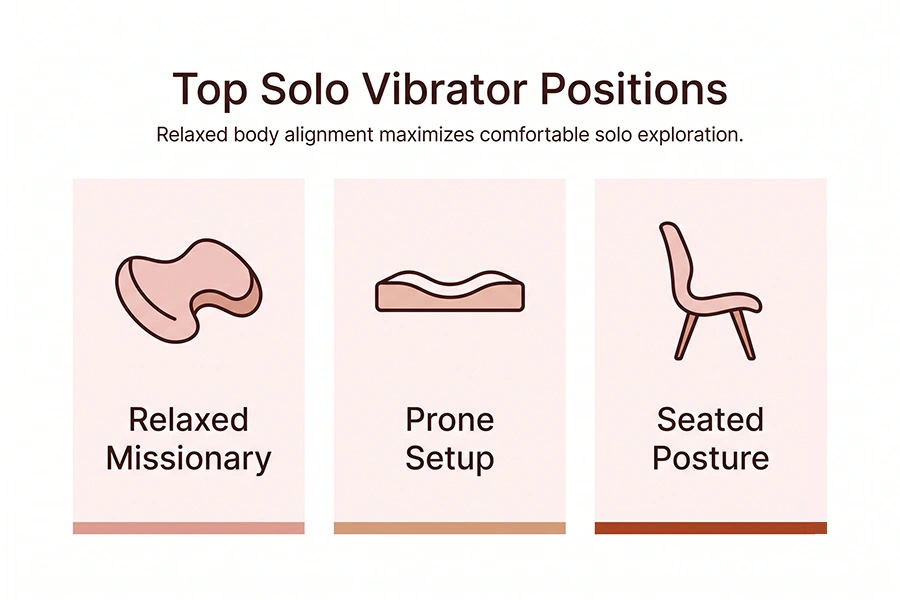
Best Solo Positions for Using a Vibrator
Solo exploration can make it easier to find what works best for your body. Below, we’ll explore some of the best positions for using a vibrator on your own.
Relaxed Missionary Position
Lie comfortably on your back with your knees bent and feet resting on the bed. If placing a pillow beneath your hips feels supportive, it can create a slightly different angle that’s comfortable for some women. This beginner-friendly position offers easy access while allowing your pelvic floor muscles (the muscles that support your pelvic organs) to stay relaxed.
Prone Position (Face Down)
Lying on your stomach can be a comfortable option if you prefer gentle, consistent pressure. A pillow under your hips may reduce strain on your lower back, while a slim or curved external vibrator can be positioned comfortably beneath the clitoris (the primary center of sexual nerve endings on the external vulva). Let your body guide the amount of pressure that feels right.
Seated Position
Sitting on a sturdy chair with your feet firmly on the floor gives you stability and allows you to adjust your posture easily. Many women find this position helpful because it offers good control over movement while reducing unnecessary strain on the back and shoulders.
Read More: 12 Sex Toys FAQs: Answers to the Most Common Questions About Sex Toys
Best Partner Positions for Using a Vibrator
Using a vibrator with a partner can add variety to intimacy. Below, we’ll explore some of the best positions for using a vibrator with a partner and how they can make it easier to find a comfortable setup.
Modified Missionary (Hips-Elevated Classic)
Standard missionary can sometimes limit hand space between bodies. By placing a wedge pillow beneath the receiving partner’s hips, the pelvic angle shifts upward. This creates ample space for a compact wand or flat clitoral device while maintaining deep eye contact and physical closeness.
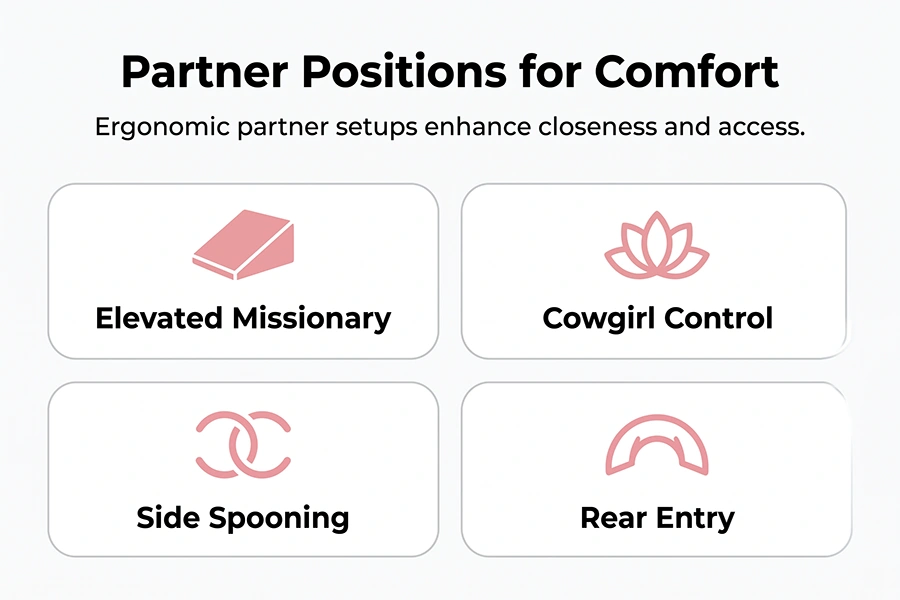
Woman-on-Top / Cowgirl
In the woman-on-top posture, the partner on top maintains full control over angle, depth, and speed. Resting your hands on your partner’s chest gives you stability to hold a vibrator precisely where you want it without feeling rushed or off-balance.
Spooning (Side-by-Side Intimacy)
Spooning is one of the most relaxed positions for couples because it places minimal strain on the hips and lower back. An external vibrator can be positioned comfortably between the partners, allowing gentle stimulation while maintaining close physical contact.

Rear-Entry / Doggy Style (Direct Access)
Whether resting on hands and knees or leaning forward over stacked pillows, rear-entry postures allow complete physical access to the vulva from beneath or behind, making it easy to hold larger wand devices securely.
Read More: Using a Vibrator During Sex: A 6-Step Guide for Couples
The table below compares the most common solo and partner positions based on comfort, ease of use, and their primary benefits
| Position | Best For | Main Benefit | Beginner Friendly |
| Relaxed Missionary Position | Beginners | Easy access, relaxed pelvic floor, comfortable body support | Yes |
| Prone Position (Face Down) | Women who prefer gentle pressure | Uses natural body weight for steady external stimulation | Yes |
| Seated Position | Better control and posture | Stable position with minimal strain on the back and shoulders | Yes |
| Modified Missionary (Hips-Elevated) | Partnered intimacy with easy clitoral access | Creates more space for external stimulation while maintaining closeness | Yes |
| Woman-on-Top (Cowgirl) | Controlling angle and depth | The receiving partner can easily adjust movement and device placement | Moderate |
| Spooning (Side-by-Side) | Comfort and extended sessions | Gentle on the hips and lower back while maintaining close contact | Yes |
| Rear-Entry (Doggy Style) | Easy access for external stimulation | Provides more room to position larger external vibrators comfortably | Moderate |
Seamless Integration and Real-World Modifications
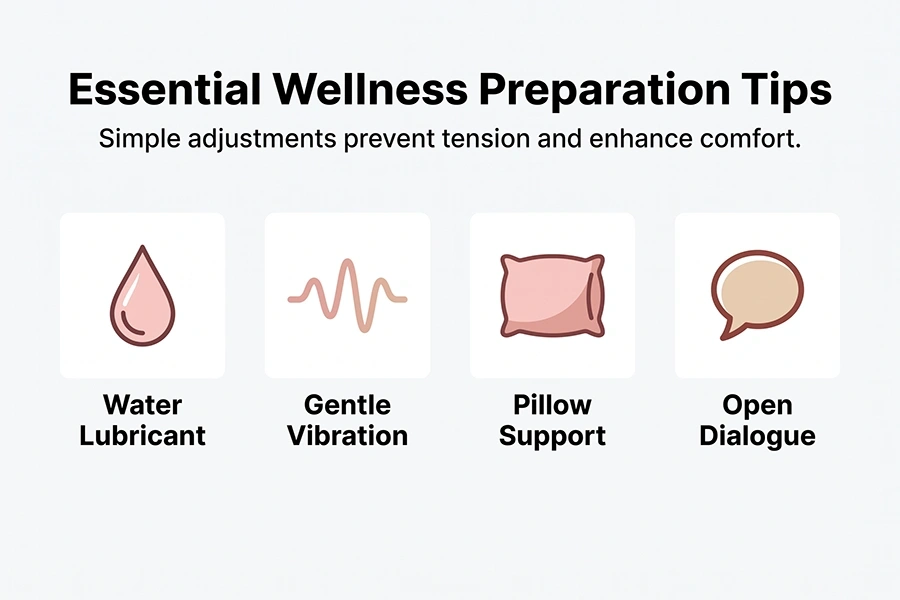
Knowing the right setup is only part of the process. Communication with your partner, body alignment, and small adjustments can make using a vibrator feel more natural, comfortable, and supportive of your sexual wellness.
How to Introduce a Device Without Disrupting the Flow
Many couples worry that reaching for a device will interrupt intimacy. A few simple preparations before you begin can make the experience feel much smoother and more comfortable.
Keep your vibrator within easy reach, apply water-based lubricant beforehand if needed, and introduce it during foreplay instead of waiting until intercourse. This allows the device to become a natural extension of touch rather than an unexpected distraction.
Adapting for Physical Limitations & Sensitivity
If you live with chronic joint pain, pelvic floor tightness, or dyspareunia (the medical term for pain during intimate activity), standard physical positions may feel uncomfortable.
- For lower back discomfort: Place a firm pillow or wedge beneath your knees or lower back to help maintain a neutral spine and reduce muscle strain.
- For pelvic floor sensitivity: Choose a flexible, body-safe device that adapts more easily to your body’s natural angles, allowing gentle contact without excessive pressure.
- For limited mobility: Experiment with supported positions that reduce pressure on the hips and shoulders while giving you better control over movement.
Easing Partner Anxiety
It is entirely normal for a partner to feel hesitant, wondering if a device is meant to replace them. Open, reassuring communication often helps ease those concerns. Framing the device as a wellness tool that complements intimacy, rather than replacing either partner, can encourage trust, reduce performance pressure, and help both of you focus on comfort, connection, and shared pleasure.
Listening to Your Body: There Are No Rigid Rules
Every individual’s anatomy is unique, from the depth of the pelvic structure to nerve distribution patterns. What works wonderfully for one body may feel ineffective for another. Treat this guide as a flexible blueprint. Experiment with subtle shifts in your pelvic tilt, vary the pressure, and allow your body’s comfort signals to guide your experience.
Clinical Reminder: Please note that these ergonomic devices and techniques are designed as supportive wellness tools to enhance quality of life. If you experience acute pelvic pain, structural discomfort, or chronic distress, consulting with a pelvic floor physical therapist or medical specialist should always be your first priority.
Final Thoughts
Exploring the best positions for using a vibrator is fundamentally an act of self-care and body awareness. By prioritizing comfort, leaning on ergonomic support like pillows, and choosing medical-grade tools that honor your body’s physiological needs, you open the door to deeper relaxation and richer intimacy. I encourage you to take things slowly, listen to your physical cues, and approach your journey with gentle curiosity.
Have you tried any of these physical setups, or do you have a favorite position that brings you complete comfort? I would love to hear your thoughts and experiences in the comments section below.
References: usstore.iroha lelo
Can regular vibrator use cause long-term nerve sensitivity loss?
No. There is no evidence that regular use causes permanent nerve damage. Temporary numbness can occur after prolonged, intense vibration but usually resolves with rest.
How can I prevent arm and wrist fatigue?
Use pillows or supported positions, such as side-lying, to reduce the need to hold the device. Lightweight, ergonomic vibrators can also minimize hand and wrist strain.
Which vibrator shape works best for missionary?
Compact, contoured vibrators or flexible-neck wands are practical choices. Their slim design allows comfortable positioning without creating awkward wrist angles.