

Key Takeaways:
- Nonporous materials: They are easier to clean and are the starting point for better intimate hygiene.
- Medical-grade silicone, borosilicate glass, stainless steel, and ABS: These are among the main materials to consider.
- Jelly, PVC, and some rubber-like materials: These materials can be porous and harder to clean thoroughly.
- Material, cleaning, drying, and lubricant compatibility: They all play a role in keeping intimate devices hygienic.
Why Your Vibrator Material Affects Your Health
The relationship between what a device is made of and intimate health comes down largely to one physical property: porosity (the degree to which a surface contains microscopic holes and pockets).
When a device is made from a porous material, its microscopic pores can absorb bodily fluids, lubricants, and other organic material. Unlike a smooth, nonporous surface, these tiny cavities can be more difficult to clean thoroughly. Simply rinsing a porous device may not remove everything that has entered the material, particularly when the product cannot be fully washed or disinfected according to the manufacturer’s instructions. This is why I generally recommend looking for smooth, nonporous materials when hygiene is a priority.

The Best Vibrator Materials to Avoid Infection
When evaluating the best vibrator material to avoid infection, your primary goal is to choose nonporous, hypoallergenic, and non-reactive options that can withstand proper sanitization.
The table below compares common vibrator materials by porosity, hygiene, and the key factors to consider when choosing a safer option.
| Material | Porosity | Hygiene | Key Consideration |
| Medical-grade platinum-cured silicone | Nonporous | Easy to clean | Check for genuine body-safe silicone |
| Borosilicate glass | Nonporous | Easy to clean | Durable and suitable for temperature play |
| Surgical stainless steel | Nonporous | Easy to clean | Durable with broad lubricant compatibility |
| High-grade ABS plastic | Nonporous | Easy to clean | Smooth, firm, and budget-friendly |
| Jelly rubber | Often porous | Harder to clean | May absorb fluids and contain unwanted additives |
| PVC / other soft plastics | Often porous | Harder to clean | Material composition can vary |
| Silicone blends | May vary | Depends on formulation | Check the exact material specifications |
Medical-Grade Platinum-Cured Silicone
Medical-grade silicone is widely considered one of the best vibrator material to avoid infection. It has a smooth, soft feel, is durable enough for regular use, and can be cleaned relatively easily. Silicone is also generally non-porous and hypoallergenic, making it a popular option for people who prioritize comfort and hygiene.
Platinum curing is a manufacturing process used to produce high-quality silicone with a consistent, smooth finish. However, the curing method alone should not be treated as a guarantee of overall product safety; the complete formulation and manufacturing standards also matter.
Borosilicate Glass
Glass sex toys are a popular choice for those who prefer a smooth, firm surface and a more refined feel. They can also be used for temperature play because glass warms or cools easily and can retain its temperature for a while. From a sustainability perspective, glass is reusable and recyclable, which may make it an appealing alternative to some other materials.
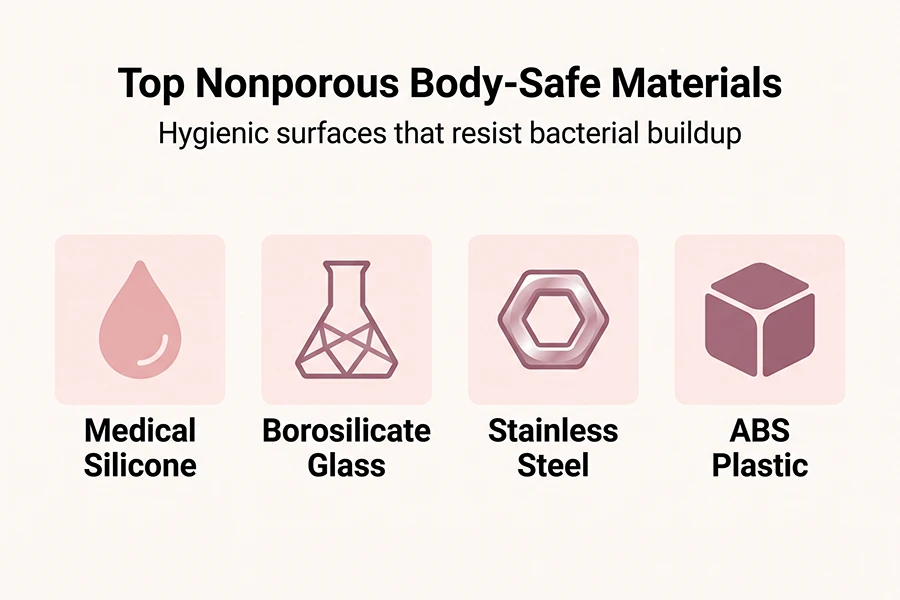
When choosing a glass toy, safety should come first. Look for products made from borosilicate glass, which is designed to withstand temperature changes and everyday use more reliably than ordinary glass. Always check the manufacturer’s material specifications before buying.
Surgical Stainless Steel
Surgical stainless steel is often considered the best vibrator material to avoid infection concerns because its smooth, nonporous surface is easy to clean and does not readily absorb fluids. It is also durable and compatible with many lubricants, although compatibility can vary by product. Always follow the manufacturer’s cleaning and sanitization instructions, especially for devices with electronic components.
High-Grade ABS Plastic
ABS hard plastic can be a practical choice for those looking for a body-safe sex toy at a more affordable price. Unlike many other plastics, ABS is non-porous, so it does not readily absorb fluids and can be cleaned more easily. Its firm, smooth surface also transfers vibrations effectively, making it particularly suitable for vibrating toys.
Materials You Should Avoid
Here are some materials to be cautious about when choosing a sex toy, particularly if hygiene and body safety are priorities:
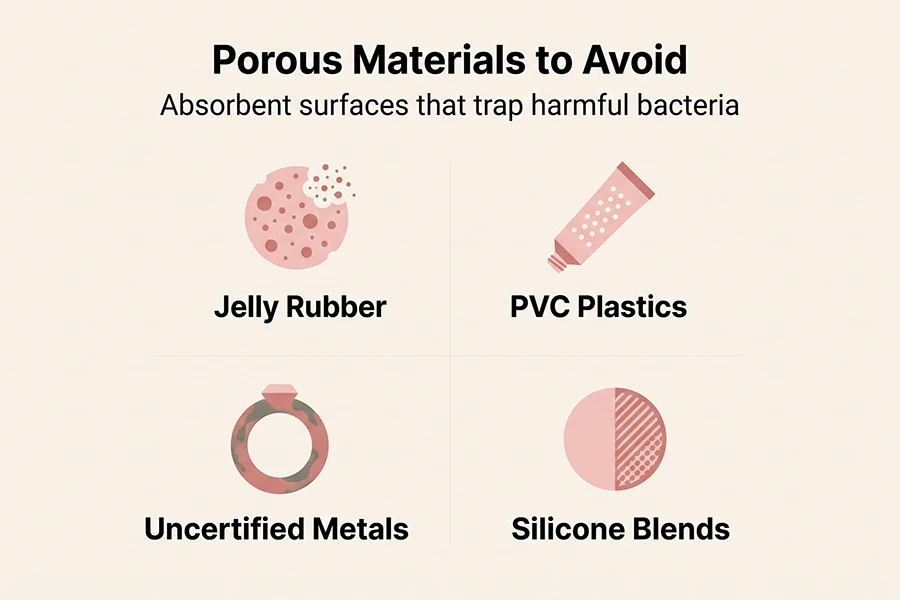
- Jelly rubber: Often porous and may contain additives such as phthalates, making it harder to clean thoroughly.
- PVC and other plastics besides ABS: May contain unwanted additives and can be porous, which makes proper cleaning more difficult.
- Non-medical-grade metals: May corrode or react with moisture, so clearly identified body-safe metals are a safer choice.
- Silicone blends: May combine silicone with other materials, and their safety and porosity can vary. Always check the manufacturer’s specifications.
Signs Your Vibrator Might Be Increasing Infection Risk
If you currently own personal devices, inspect them regularly for physical changes that can make thorough cleaning more difficult or indicate that the material is deteriorating:
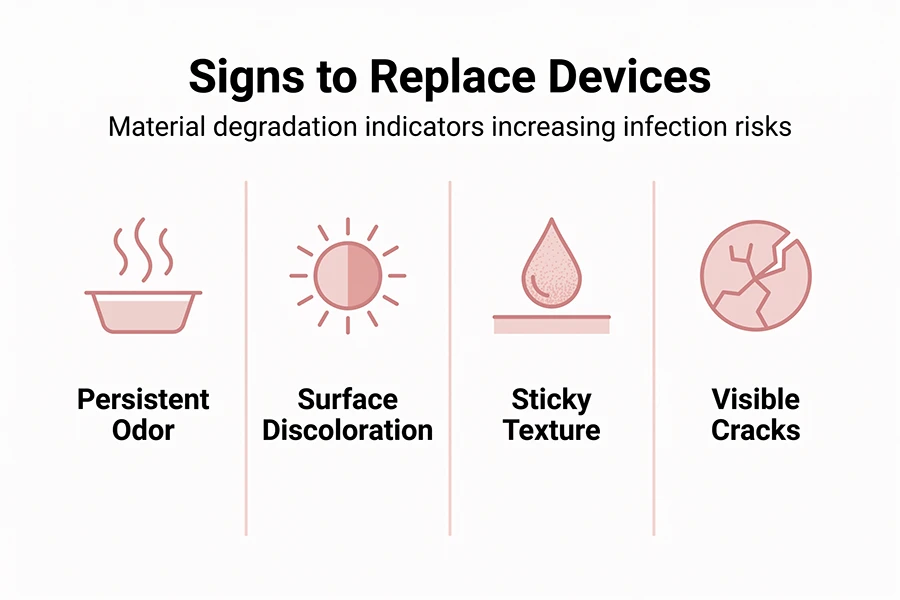
- Persistent Odor: A strong or unusual smell that remains after cleaning may indicate material deterioration or trapped residue.
- Discoloration or Yellowing: New or worsening stains, cloudiness, or yellowing may signal aging or material changes, especially when paired with surface damage.
- Sticky or Damaged Surface: Stickiness, cracks, peeling, or pitting can make thorough cleaning difficult and are good reasons to replace the device.
Read More: Can Using a Vibrator Cause Infection? The Real Risks and Must-Know Hygiene Truths
Cleaning and Maintenance Tips to Prevent Infection
Proper maintenance helps keep even high-quality, body-safe materials easier to clean throughout their usable lifespan.
- Cleaning by Material: Follow the manufacturer’s cleaning instructions. Warm water and mild, fragrance-free soap work for many silicone and ABS devices. Avoid harsh chemicals unless approved, and let the device dry completely before storage.
- Lubricant Compatibility: Some lubricants can damage certain materials. Water-based lubricant is often a simple choice for silicone, while glass and stainless steel generally work with most lubricants. When unsure, check the manufacturer’s guidance.
Read More: How to Clean a Vibrator: A Midwife’s Guide to Lasting Wellness
How to Choose a Safer Vibrator When Shopping
When choosing the best vibrator material to avoid infection, look beyond attractive packaging and check the actual material specifications. Look for clearly identified, nonporous materials such as medical-grade silicone, borosilicate glass, stainless steel, or high-quality ABS, along with transparent care instructions and information from a reputable manufacturer.
When you’re ready to upgrade your intimate collection and buy vibrators online, Selove makes it easier to choose high-quality vibrators designed with both comfort and hygiene in mind. Always read the manufacturer’s cleaning instructions carefully before use. Features such as waterproof construction can make regular cleaning more convenient, but note that the overall design, material quality, and durability are more meaningful indicators than marketing claims alone.
Important Clinical Reminder:
Please keep in mind that these tools are intended as supportive wellness devices to enhance your overall quality of life. If you are experiencing acute pelvic pain, unusual or persistent discharge, or ongoing irritation or discomfort, consulting directly with a physician or a specialized pelvic floor physical therapist should be your first priority.
Read More: Can You Use a Vibrator With a Yeast Infection? Safety & Doctor Advice
Final Thoughts
By learning how to identify the best vibrator material to avoid infection, you can make informed choices about hygiene, reduce avoidable irritation risks, and choose devices that are easier to clean and maintain. Smooth, nonporous, well-documented materials such as medical-grade silicone can be a practical choice for supporting good intimate hygiene.
Do you have questions about caring for your body-safe devices or choosing the right material for your needs? Please share your thoughts and questions in the comments section below, I would love to hear from you.
References: thenaturallovecompany mindbodygreen bboutique
Can using a vibrator cause a Urinary Tract Infection (UTI)?
A vibrator does not directly cause a UTI, but sexual activity and poor hygiene can help move bacteria toward the urethra. Wash your hands and device, avoid moving a toy from anus to vagina without cleaning it, and use enough lubricant. See a healthcare professional for persistent urinary symptoms.
How can I safely sanitize a silicone vibrator if I suspect it was used during an infection?
Follow the manufacturer’s cleaning instructions. Nonporous silicone is easier to clean thoroughly, but heat sanitization is only appropriate if the entire device allows it. If the toy is porous, damaged, or cannot be cleaned adequately, replacement may be more hygienic.
Is TPE (Thermoplastic Elastomer) completely non-porous and body-safe?
Not necessarily. TPE properties vary by formulation, so it should not automatically be considered equivalent to medical-grade silicone. Check the manufacturer’s material and cleaning information, and choose a clearly documented nonporous material when hygiene is a priority.