

Key Takeaways:
- Prioritize hygiene: Clean your device before and after each use to help reduce the risk of transferring microorganisms.
- Choose the right material: Non-porous materials, such as silicone, are generally easier to clean thoroughly and less likely to retain microorganisms.
- Use protection when sharing: A new condom or other suitable barrier can help reduce the risk of transferring infections between partners.
- Listen to your body: Unusual discharge, persistent irritation, pain, or discomfort are reasons to pause use and consult a healthcare provider if symptoms persist.
Can Using a Vibrator Really Cause an Infection?
In my clinical practice, I regularly meet women who ask, “Can using a vibrator cause infection?” To answer this question, it is important to understand how the vagina’s natural microbial environment works.
The vagina naturally contains beneficial bacteria, including lactobacilli, which help maintain a slightly acidic environment and limit the overgrowth of potentially harmful microorganisms. Using a vibrator does not automatically cause an infection. However, a poorly cleaned device can carry bacteria or other microorganisms, and sharing a toy without proper cleaning or a new barrier can spread infections.

What Types of Infections Can Occur?
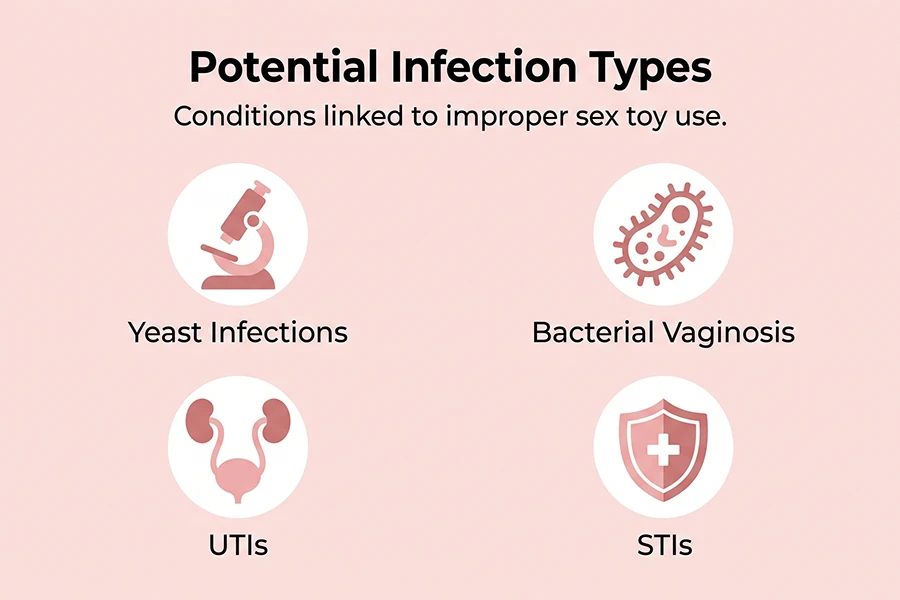
When exploring the common question of whether can using a vibrator cause infection, it is essential to recognize that not all intimate health concerns fall under a single category. The specific type of problem truly matters, as the body’s delicate microbial environment can react to external disruptions in a variety of ways. Rather than assuming every symptom points to the exact same issue, familiarizing yourself with the different classifications of discomfort or bacterial imbalance will help you better understand your own body. Below, we will break down the distinct conditions to help you identify exactly what you might be experiencing.
Yeast Infections (Candidiasis)
Many women specifically ask, “Can using a vibrator cause a yeast infection?” On its own, using a clean vibrator is not considered a direct cause of vaginal yeast infection. A vibrator yeast infection is not a distinct medical diagnosis; however, improper cleaning, inadequate drying, or excessive friction during vibrator use may contribute to irritation or microbial exposure. Other established risk factors for vulvovaginal candidiasis include recent antibiotic use, pregnancy, diabetes, hormonal factors, and immunosuppression.
Read More: Can You Use a Vibrator With a Yeast Infection? Safety & Doctor Advice
Bacterial Vaginosis (BV)
BV occurs when the normal balance of bacteria in the vagina changes. It is not considered a typical STI, and its exact cause is not fully understood. Sharing sex toys may contribute to the exchange of vaginal bacteria, and BV.
Urinary Tract Infections (UTIs)
Sexual activity can move bacteria toward the urethra (the tube that carries urine out of the body), increasing the chance of a UTI. A contaminated device or repeated friction around the urethral opening may potentially contribute to this risk, although a vibrator should not be considered a direct cause of every UTI.
Sexually Transmitted Infections (STIs)
Sharing a sex toy with someone who has an STI can transmit infection through bodily fluids or direct contact. Using a new condom on the toy between users and washing it according to the manufacturer’s instructions can reduce this risk. Never move a toy from the anus to the vagina without washing it thoroughly or changing the condom first.
What Factors Increase the Risk of Infection?
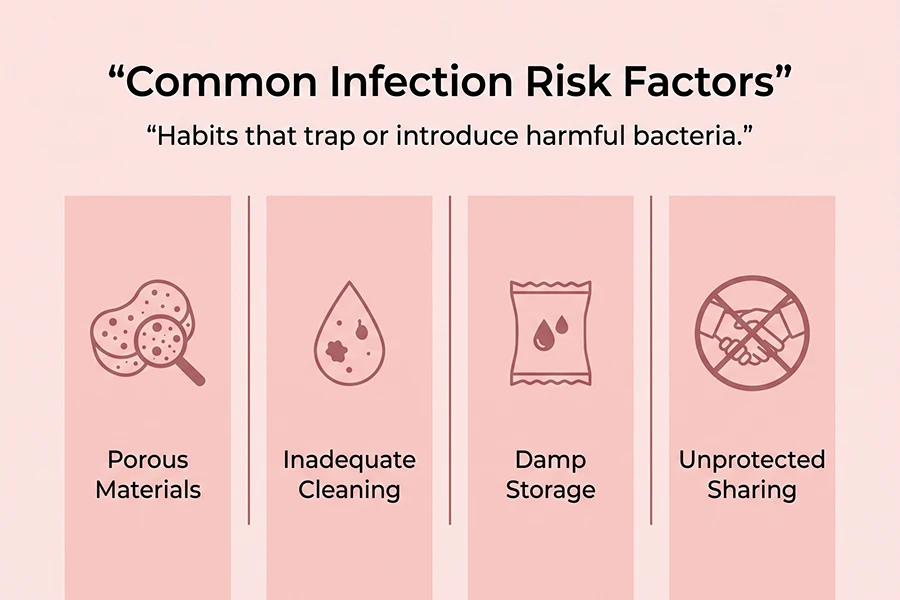
The table below highlights the key factors that may increase the risk of irritation or infection associated with sex toy use, explains how each factor may contribute to potential health concerns, and provides practical steps to help reduce these risks.
| Risk Factor | How It May Increase Risk | Preventive Action |
| Porous Materials | Some porous materials may retain bodily fluids and microorganisms, making them more difficult to clean thoroughly. | When possible, choose non-porous materials that can be cleaned effectively according to the manufacturer’s instructions. |
| Inadequate Cleaning | Residual bodily fluids, lubricants, and microorganisms may remain on a toy when it is not cleaned properly after use. | Clean the device according to the manufacturer’s instructions and allow it to dry completely before storage. |
| Moisture During Storage | Storing a toy while it is still damp may promote microbial growth and may contribute to unpleasant odors or contamination. | Let the toy dry completely before placing it in a clean, dry storage pouch or container. |
| Sharing Without Protection | Sharing a sex toy can transfer bodily fluids and microorganisms between partners, particularly when the toy is used internally. | Use a new condom or other suitable barrier between users and clean the toy thoroughly between uses. |
| Changing Body Sites Without Cleaning | Moving a toy from the anus to the vagina without cleaning it or changing the barrier can transfer bacteria between areas. | Clean the toy or change the condom before using it on another part of the body. |
Warning Signs: When to Worry and See a Doctor
You should contact a healthcare provider if you experience:
- Noticeable changes in vaginal discharge, such as a clumpy texture or grayish color.
- A strong, unusual, or fishy odor.
- Persistent itching, burning, or redness around the vulva (the external genital area).
- A burning sensation during urination.
- Pelvic pain or new, unexplained dyspareunia (pain during sexual activity).
Important Clinical Reminder:
As a midwife and sex therapist, my advice is simple: don’t ignore persistent or unusual vaginal or vulvar symptoms, and don’t feel embarrassed about seeking professional care. These symptoms can have several different causes, so rather than self-diagnosing or repeatedly treating yourself for a yeast infection, it is important to identify the underlying cause and receive the appropriate treatment.
Maintenance and Safe Use Tips for Infection Prevention
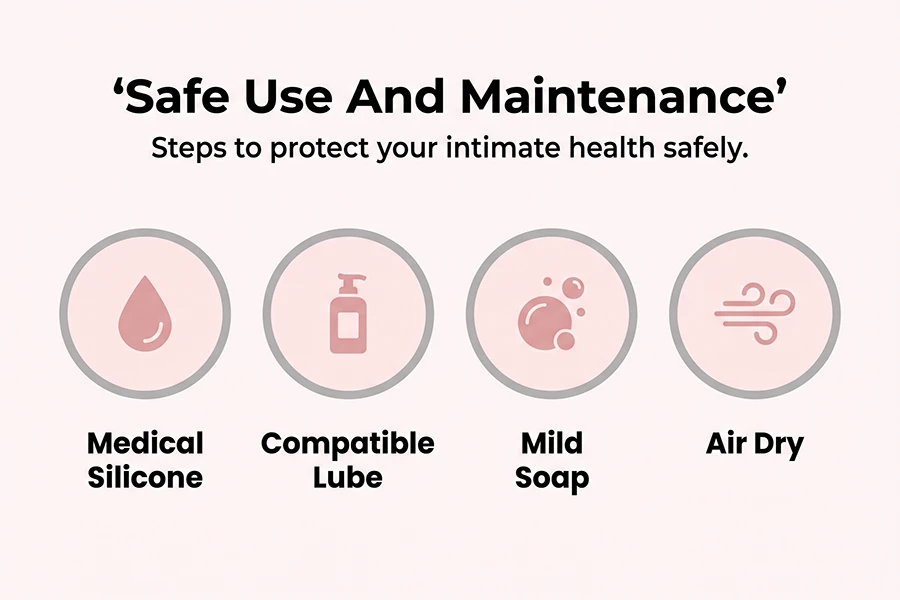
Reducing the risk of irritation and infection starts with choosing appropriate materials, following the manufacturer’s care instructions, and maintaining good hygiene when using personal wellness devices.
Consider the Non-porous materials
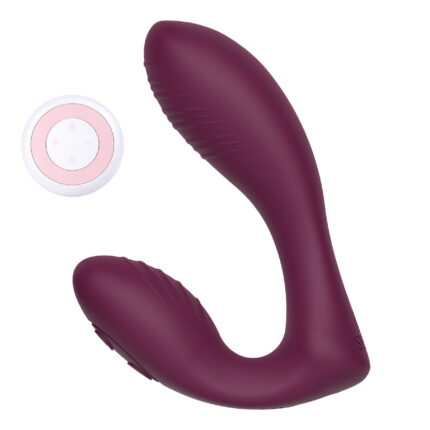
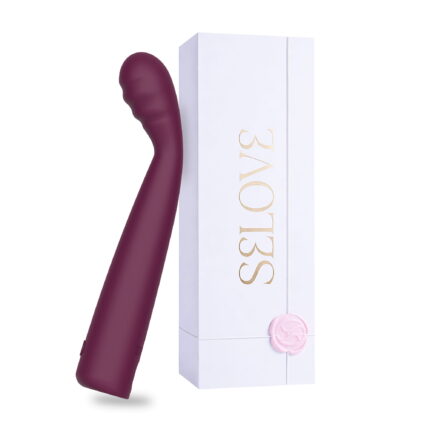
I always recommend products made of medical-grade silicone. They are generally easier to clean thoroughly because they do not readily absorb bodily fluids. If you choose a silicone vibrator, check the manufacturer’s specifications to confirm the material and follow the recommended cleaning instructions. Keep in mind that labels such as “medical-grade” or “body-safe” should not replace proper cleaning and safe-use practices.
Read More: Best Vibrator Material to Avoid Infection: 4 Body-Safe Materials to Choose
Use an appropriate lubricant
Choosing a gentle, compatible lubricant can help reduce friction and irritation during use. Water-based lubricants are generally compatible with silicone devices. Silicone-based lubricants may not be suitable for every silicone toy because some formulations can affect the surface of certain silicone materials. Oil-based lubricants may also be incompatible with some sex toys and can be difficult to remove. When in doubt, check the manufacturer’s recommendations for both the device and lubricant.
Clean, Disinfect, and Store Your Vibrator Properly Between Uses
Between uses, clean the vibrator according to the manufacturer’s instructions, paying particular attention to any areas that come into contact with bodily fluids. If the device is waterproof and designed for washing, rinse it with warm water and use a mild, unscented soap when recommended. Avoid harsh disinfectants unless the manufacturer specifically advises their use, as they may damage the material or irritate sensitive tissue.
After cleaning, rinse away any soap residue and allow the vibrator to air-dry completely before storing it in a clean, dry pouch or container. If the toy is shared, used between different body areas, or used during an activity that may involve exposure to bodily fluids, consider using a new condom or other appropriate barrier between uses and clean the device as directed.

Final Thoughts
So, can using a vibrator cause infection? It can, particularly when hygiene, material safety, or proper storage are overlooked. Choosing non-porous, body-safe products, cleaning them according to the manufacturer’s instructions, and paying attention to unusual symptoms can help reduce these risks. Good intimate hygiene should be a simple part of your overall wellbeing, not a source of anxiety.
I’d love to hear from you, what steps do you take to prioritize your intimate health, or do you have any lingering questions? Please share your thoughts in the comments below, and let’s continue breaking down these medical concepts together.
References: healthline acog
Is it safe to wash my silicone vibrator in the dishwasher?
Only if the manufacturer specifically states that it is dishwasher-safe. Otherwise, follow the recommended cleaning method, typically warm water and a mild, unscented soap.
Can I use baby wipes to clean my vibrator?
Baby wipes may contain fragrances, oils, or other ingredients that can leave residue or irritate sensitive tissue. Follow the manufacturer’s cleaning instructions or use a product specifically designed for sex-toy cleaning.
How often should I replace my vibrator?
There is no fixed replacement schedule. Replace the device if it develops cracks, tears, a persistent sticky texture, unusual odor, or other signs of material deterioration.