

Key Takeaways:
- The biology of routine: Discover why familiarity, stress, and fatigue naturally alter intimacy, and how recognizing this shift is the crucial first step.
- Communication as foreplay: Learn why having honest conversations outside the bedroom creates the safest foundation for exploring new desires.
- The magic of thoughtful novelty: Explore how simply changing the timing, setting, or pace can instantly make a familiar connection feel unpredictable and exciting.
- Elevating wellbeing with accessories: Find out how introducing high-quality, clinical wellness tools can stimulate nerve endings and support pelvic health without adding pressure.
Why Does Intimacy Feel Repetitive Over Time?
When a relationship becomes long-term, familiarity and predictability can gradually replace some of the novelty and curiosity that naturally exist at the beginning. Research suggests that sexual desire and arousal can be affected by partner familiarity, while novelty may increase sexual interest. Over time, couples may also fall into familiar sexual scripts, repeating the same patterns with less room for exploration. This doesn’t mean attraction or love has disappeared; it simply means intimacy may benefit from intentional curiosity and flexibility.
Everyday life can add another layer. Work pressure, childcare, poor sleep, and ongoing stress can reduce the mental and physical energy available for intimacy, while research has linked higher daily stress with lower sexual desire and arousal. Feeling understood and valued by a partner also matters. Research has associated partner responsiveness with greater sexual desire, particularly among women.
So, when intimacy starts feeling repetitive and you find yourself wondering how to make sex more exciting, I wouldn’t immediately assume you need something more adventurous. Sometimes the missing ingredient is simply attention and intention, making space for honest conversations, noticing how your preferences have changed, and allowing your intimate life to evolve with your relationship.
Read More: How to Improve Sex Life: Science-Backed Strategies for Better Connection
Communication and Honesty: The Foundation of Change
Before trying anything new, I recommend talking outside the bedroom. A relaxed conversation over coffee or during a walk can feel much less pressured than raising the subject at the moment intimacy is expected.
Try talking about experiences rather than criticizing your partner. For example, instead of saying, “We never do anything different anymore,” you might say: “I’ve noticed our routine has become predictable, and I’d love to find a few ways to make intimacy feel more connected again.”
You can also talk about what you already enjoy, what you would like more of, and what you are curious about. You don’t need to agree to every idea. The purpose of the conversation is to understand each other better.
Chloe’s Clinical Myth vs. Fact:
- Myth: You should always feel a spontaneous urge before initiating intimacy.
- Fact: Relying solely on spontaneous desire is a trap. Most women experience “responsive desire,” meaning their libido (the psychological desire and urge for sexual intimacy) only awakens after physical or emotional stimulation has already begun. Waiting to be in the mood might mean waiting forever; sometimes, you have to start the engine to feel the drive.
Novelty and Curiosity: Trying New Times and Spaces
When exploring how to make sex more exciting, remember that novelty doesn’t have to mean doing something dramatic. Sometimes changing one familiar element is enough to make intimacy feel different.
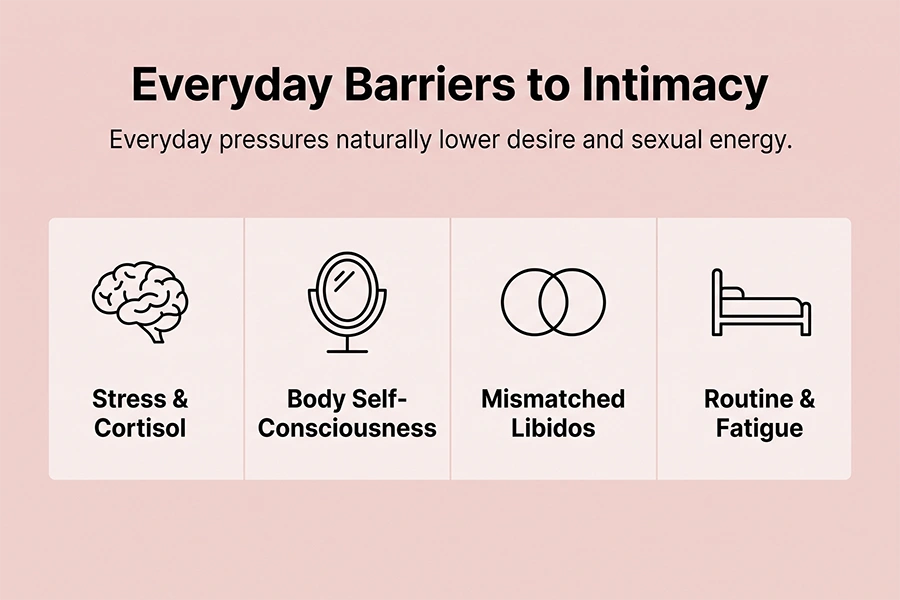
You could try:
- Choosing a different time of day when neither of you is exhausted.
- Putting phones and other distractions away.
- Changing the setting or atmosphere.
- Making more time for affectionate connection before intimacy.
- Talking together about something new you would both genuinely like to explore.
Mayo Clinic suggests adding some variety to your sex life by trying a different sexual position, time of day, or location, spending more time on foreplay, and, when both partners are open to it, exploring sex toys or fantasy.
Mindful Touch and Extended Foreplay
One of the simplest ways to change a repetitive routine is to slow it down. Instead of treating intimacy as something that needs to reach a particular outcome, try spending more time noticing physical sensations, breathing, emotional connection, and your partner’s responses. This is related to the therapeutic concept of sensate focus, which shifts attention away from performance and toward present-moment awareness.
Clinical Reminder:
If vaginal dryness, hormonal changes, or discomfort affect intimacy, taking more time for arousal may help. However, persistent or severe pain during sex should not be ignored or pushed through. Because pain can have several causes, frequent or significant discomfort should be evaluated by a qualified healthcare professional.
The table below shows how small, intentional shifts can help resolve common intimacy hurdles, such as routine or distraction without adding pressure to your relationship.
| When intimacy feels… | Try… | The purpose |
| Predictable | Change the time or setting | Add gentle novelty |
| Rushed | Slow down the pace | Create more space for connection |
| Performance-focused | Focus on sensations | Reduce pressure |
| Distracted | Remove phones and screens | Improve presence |
| Repetitive | Explore a mutually agreed new option | Introduce variety |
The Role of Sex Toys in Adding Variety
Sexual wellness tools can be another way to introduce variety when you are exploring how to make sex more exciting, but I don’t see them as replacements for a partner. They can simply give you and your partner another option for exploring what feels comfortable and interesting to you.

If you decide to buy a vibrator, I recommend looking beyond the number of settings or marketing claims. For intimate use, practical considerations such as body-safe materials, a non-porous surface, comfortable ergonomics, easy cleaning, and controls that are simple to operate matter more.
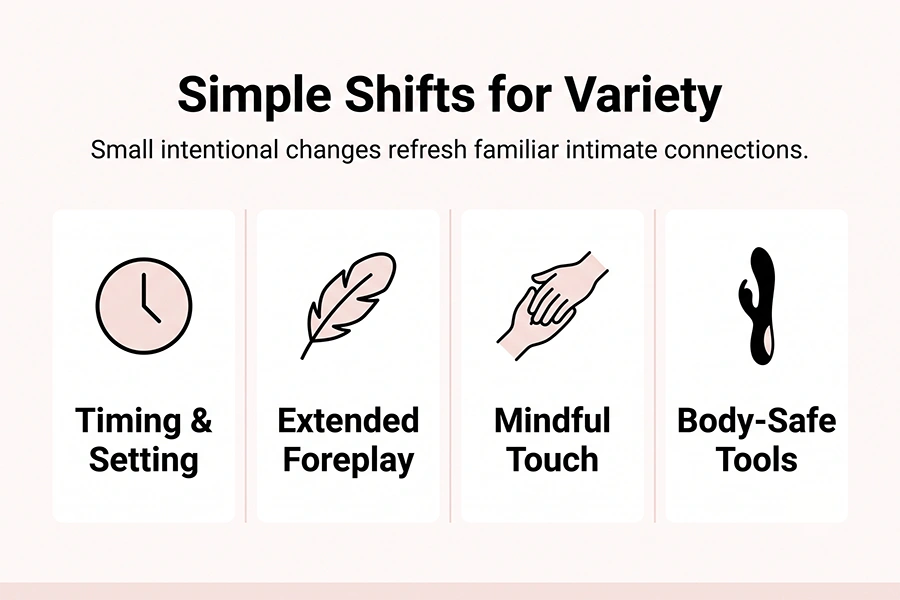
Different designs serve different preferences. Wand vibrators offer versatile external stimulation, while G-spot and rabbit vibrators are designed for more targeted stimulation. Wearable couples vibrators can add a shared element to intimacy, making them another option for couples who want to try something different.
Remember, you don’t need the most powerful or feature-heavy device. The right choice is simply one that matches your preferences, feels comfortable, and can be easily incorporated into your routine. Always follow the manufacturer’s cleaning and care instructions.
Read More: How To Choose Your First Sex Toy In 3 Steps
Common Barriers to Better Intimacy and When to Seek Help
Sometimes the answer to a less exciting sex life isn’t trying something new; it’s addressing what is getting in the way.
- Stress and Fatigue: Cortisol (the primary stress hormone) is the enemy of arousal. Before attempting intimacy, try practicing 10 minutes of deep diaphragmatic breathing to signal to your nervous system that you are safe and ready to relax.
- Body Image Concerns: It is hard to be present if you are criticizing your stomach, breasts or thighs in your head. Practice body neutrality, focusing on what your body can feel and do, rather than what it looks like. Dimmer lighting can also help reduce visual self-consciousness.
- Mismatched Libidos: It is common for partners to have different levels of desire. The solution is finding a middle ground where physical affection (cuddling, kissing) can occur without the pressure of it always leading to a full sexual encounter.
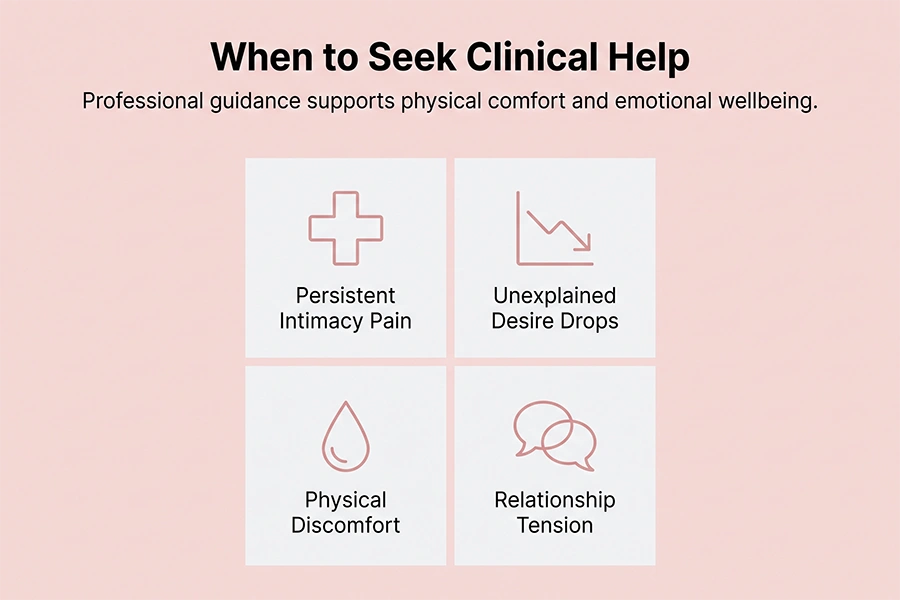
While books and articles on how to make sex more exciting are excellent starting points, there are times when clinical intervention is the best path forward. I recommend seeking a certified sex therapist or healthcare provider if:
- You regularly experience pain during intimacy.
- A sudden or persistent change in desire is causing you distress.
- Vaginal dryness or other physical symptoms are interfering with intimacy.
- Medication, hormonal changes, or another health condition may be affecting your sexual function.
- Anxiety, past trauma, or body-image concerns make intimacy difficult.
- Sexual difficulties are creating significant tension or distress in your relationship.
Final Thoughts
Learning how to make sex more exciting doesn’t have to mean constantly searching for something bigger, newer, or more adventurous. In many relationships, the most meaningful changes are much smaller: having an honest conversation, making room for curiosity, slowing down, changing a familiar routine, or addressing the stress and physical discomfort that have been getting in the way.
I’d love to hear from you, what small change has made the biggest positive impact on your own wellness journey? Please share your thoughts in the comments below.
References: mayoclinic pubmed pubmed
Can a relationship be healthy if sex becomes less frequent?
Yes. There’s no “normal” frequency. What matters is that both partners feel comfortable and the change isn’t causing distress.
How long does it take to bring excitement back into a relationship?
There’s no fixed timeline. Small changes may help quickly, while deeper issues like stress or relationship concerns can take longer.
What if my partner doesn’t want to try anything new?
Talk openly without pressure. Focus on what feels comfortable for both of you and choose changes you can mutually agree on.