

Key Takeaways:
- Bacterial Transfer: Discover how contaminated devices can introduce UTI-causing bacteria into the urinary tract.
- Material Safety: Understand why porous surfaces may retain microorganisms even after routine washing.
- Preventive Care: Learn which cleaning practices and device-care habits help reduce your risk of infection.
How Can Contaminated Sex Toys Lead to Urinary Tract Infections (UTIs)?
A urinary tract infection (UTI) develops when bacteria enter the urinary system through the urethra (the tube that carries urine out of the body) and multiply. Most UTIs affect the bladder, although an infection can sometimes spread upward to the kidneys.
One of the most common causes is Escherichia coli (E. coli), a bacterium that normally lives in the digestive tract. Because the female urethra is relatively short and located close to the anus, bacteria from the surrounding genital and anal areas can reach its opening more easily.
Sexual activity can move these bacteria toward the urethra through contact with fingers, genital skin, or sex toys. This is one reason “can dirty sex toys cause UTI” is an important question when discussing intimate hygiene. A contaminated device may provide another route for bacterial transfer, particularly when cleaning, storage, or handling practices are inadequate.
Bacterial Transfer: From Sex Toys to the Urethra
Sex toys can collect microorganisms from genital skin, bodily fluids, the anal area, and contaminated storage surfaces. If a device is reused without appropriate cleaning, these microorganisms may be transferred to the surrounding genital area and potentially reach the urethral opening.
I pay particular attention to three situations when discussing intimate hygiene:
- Switching between anal and vaginal contact: Moving a toy from anal to vaginal use without thorough cleaning or changing its condom can transfer intestinal bacteria, such as E. coli, and increase the risk of infection.
- Sharing intimate devices: Sharing uncleaned toys or failing to change condoms between partners can transfer bodily fluids and infectious microorganisms.
- Inadequately cleaned devices: Bodily fluids and microorganisms can remain in textured surfaces, seams, and crevices if toys are not cleaned according to the manufacturer’s instructions.

An important distinction is that bacterial exposure does not automatically lead to a UTI. Bacteria must enter the urinary tract and establish an infection. Individual anatomy, previous UTIs, and other health factors can also influence susceptibility.
The Role of Porous vs. Nonporous Materials
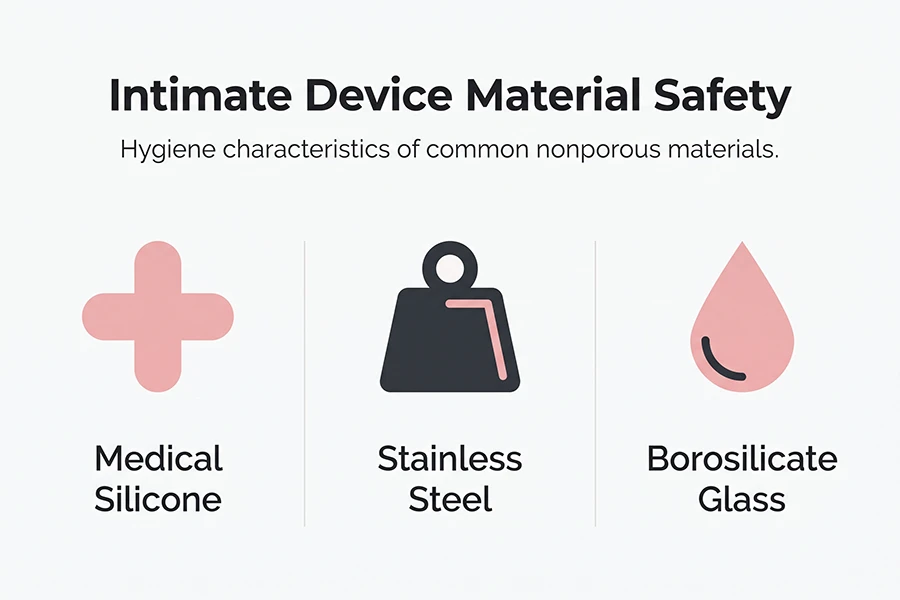
The material of a sex toy influences how easily its surface can be cleaned. Nonporous materials have a smooth structure that does not readily absorb microorganisms, while porous materials may contain microscopic spaces where residue and bacteria can remain. This distinction is particularly important when considering can dirty sex toys cause UTI, as bacteria trapped in difficult-to-clean surfaces may increase the risk of contamination.
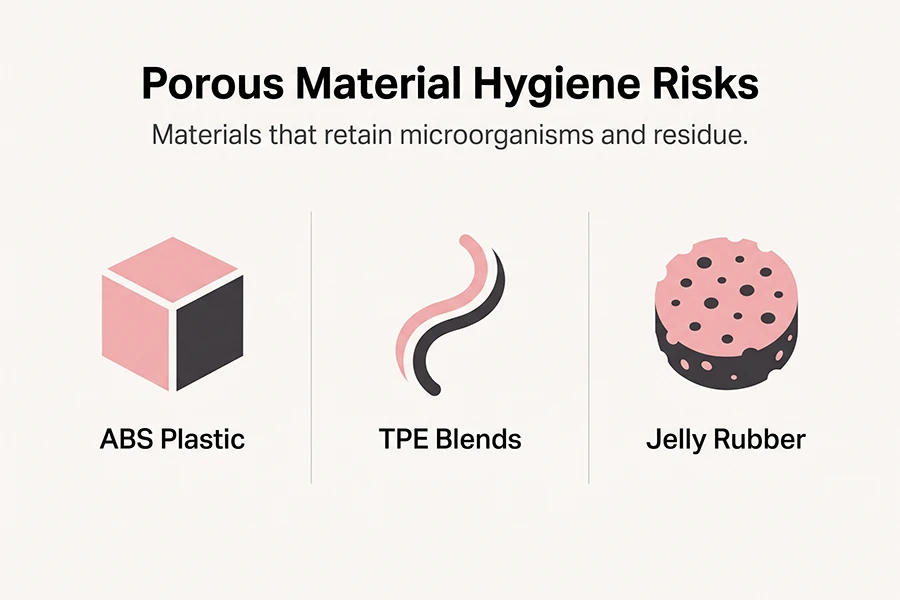
For internal use, I generally recommend choosing products made from verified body-safe, nonporous materials.
The table below compares common sex toy materials in terms of their hygiene characteristics, porosity, and recommended cleaning methods.
| Material | Hygiene characteristics | Cleaning considerations |
| 100% medical-grade silicone | Nonporous and easy to clean | Mild soap and warm water, following manufacturer instructions |
| Stainless steel | Nonporous and durable | Wash with mild soap and water |
| Borosilicate glass | Nonporous when intact | Wash carefully and inspect for cracks |
| Hard ABS plastic | Nonporous | Clean according to manufacturer guidance |
| TPE and TPR | May be porous | Use a condom and follow specific care instructions |
| Jelly rubber and PVC | Often porous | More difficult to clean thoroughly; consider replacement if hygiene is uncertain |
A clinical distinction worth understanding:
Not all silicone products are identical. Pure 100% silicone is generally nonporous, but silicone blends and products with uncertain material compositions should not automatically be considered equally hygienic.
Also, a nonporous surface does not mean a toy is automatically sterile or antibacterial. Proper cleaning remains essential regardless of material.
Myth vs. Fact: Does a Clean-Looking Toy Mean It Is Safe?
- Myth: If a sex toy looks clean and has no visible residue, it cannot carry bacteria.
- Fact: Microorganisms are not necessarily visible to the naked eye. A toy may appear completely clean while still carrying microorganisms, particularly if it has a porous surface, damaged coating, or difficult-to-reach areas.
This is why I encourage a consistent cleaning routine rather than relying on appearance or smell to determine whether a device is safe.
Read More: Best Vibrator Material to Avoid Infection: 4 Body-Safe Materials to Choose
Identifying Warning Signs: When Is Your Toy Contaminated or Unusable?
Visual inspection cannot confirm bacterial contamination, but cracks, sticky surfaces, or other signs of deterioration may make cleaning less effective. These warning signs matter when considering can dirty sex toys cause UTI, as damaged toys may retain bacteria.
Look out for these warning signs:
- Persistent unpleasant odor: A smell that remains after appropriate cleaning may indicate trapped residue or material deterioration.
- Sticky or tacky texture: A surface that becomes sticky over time may suggest that the material is breaking down.
- Visible cracks or tears: Damaged surfaces can create small spaces where bodily fluids and microorganisms accumulate.
- Peeling or discoloration: Unexpected changes in the material may indicate deterioration.
- Visible mold or persistent residue: These are clear reasons to discontinue use.
If you notice any of these changes, replacing the device is generally a safer choice than trying to restore its original condition with stronger cleaning chemicals.
Read More: Can You Get a UTI After Using a Vibrator? 5 Warning Signs & 6 Prevention Rules
Standard Cleaning Protocols for Longevity and Safety (A Step-by-Step Disinfection Guide)
A consistent cleaning routine helps reduce bacterial contamination and keep intimate devices safe. I recommend following these four steps, always checking the manufacturer’s care instructions first.
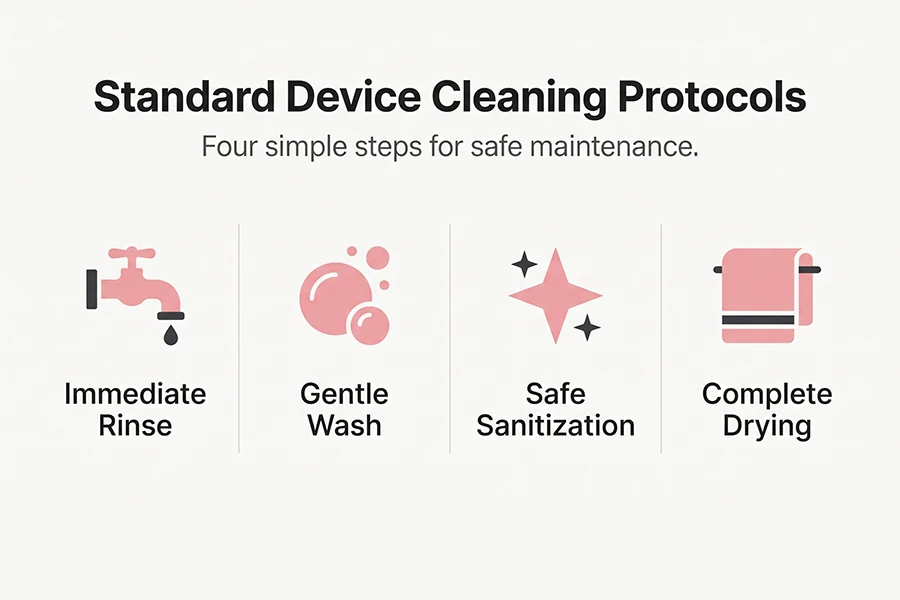
Step 1- Immediate Post-Use Rinse
If the device is waterproof, rinse it under warm running water to remove visible bodily fluids and lubricant residue. For devices that are not fully waterproof, use a clean, damp cloth instead, keeping water away from electrical components, charging ports, and battery compartments.
Step 2- Gentle Surface Cleaning
Wash the toy with warm water and mild, unscented soap or a manufacturer-approved cleanser. Pay attention to seams and textured areas where residue and bacteria may collect, as can dirty sex toys cause UTI is closely linked to inadequate cleaning. Avoid harsh or fragranced cleaners that may damage the material or irritate sensitive genital tissue.
Step 3- Additional Sanitization (Only When Suitable)
Some non-motorized toys made from compatible silicone or stainless steel may be boiled for additional sanitization, but only if the manufacturer permits it. Never boil a toy based solely on its material or waterproof label. Motorized, rechargeable, and electronic devices should not be boiled unless explicitly approved by the manufacturer.
Step 4- Complete Drying and Safe Storage
Allow the toy to air-dry completely or pat it dry with a clean, lint-free cloth. Ensure no moisture remains around seams or charging areas, then store it in a clean pouch or container away from dust, sunlight, and excessive heat.
Remember, cleaning, sanitizing, and sterilizing are different. Routine washing removes bodily residue and reduces microbial contamination but does not eliminate all microorganisms. Following the manufacturer’s care instructions helps maintain hygiene and extend the device’s lifespan.


Final Thoughts
So, can dirty sex toys cause UTI? Yes. Contaminated devices can transfer harmful bacteria toward the urethra, potentially increasing your risk of infection. The good news is that consistent cleaning, choosing body-safe nonporous materials, and following proper storage practices can help reduce bacterial contamination and protect your urinary health.
I encourage you to approach intimate wellness without shame or worry. Prioritize your comfort, follow safe hygiene habits, and care for your devices. If you experience recurring UTIs or persistent urinary symptoms, consult a healthcare professional.
I’d love to hear your thoughts or answer your questions in the comments.
References: everydayhealth cdc
Can I use regular dish soap or body wash to clean my intimate devices?
Not always. Use mild, unscented soap on compatible nonporous devices. Avoid harsh detergents, fragrances, and abrasive cleaners that may damage materials or irritate sensitive tissue. Follow the manufacturer’s instructions.
How often should I perform a deep sanitization on my silicone wellness tools?
After every use, perform routine cleaning with warm water and mild soap. Additional sanitization depends on the device’s material and instructions. Avoid boiling or disinfectants unless approved by the manufacturer.
Can sharing a sex toy between partners increase the risk of a UTI?
Yes. Sharing uncleaned toys or failing to change condoms between partners can transfer bacteria such as E. coli toward the urethra and increase STI risk. Clean the device and use a new condom for each partner.