

If you’re wondering, “can you share a sex toy safely?” the short answer is: yes, you can share a vibrator or other sex toy more safely, but sharing is not completely risk-free. A shared toy can transfer sexual fluids and germs between partners, so the safest approach is to clean it correctly between users and, when appropriate, use a new condom on the toy for each person. The toy’s material and whether it can be safely washed also matter.
In this guide, I’ll walk you through the practical steps I recommend: which materials are easier to keep hygienic, how cleaning differs between waterproof and non-waterproof toys, when a condom is the better barrier, and when it’s wiser not to share a particular toy at all. Keep reading for a simple, evidence-based approach to safer sex-toy sharing.
Key Takeaways:
- Material matters: Non-porous materials such as 100% silicone are easier to clean thoroughly, while porous or potentially porous materials can be harder to clean.
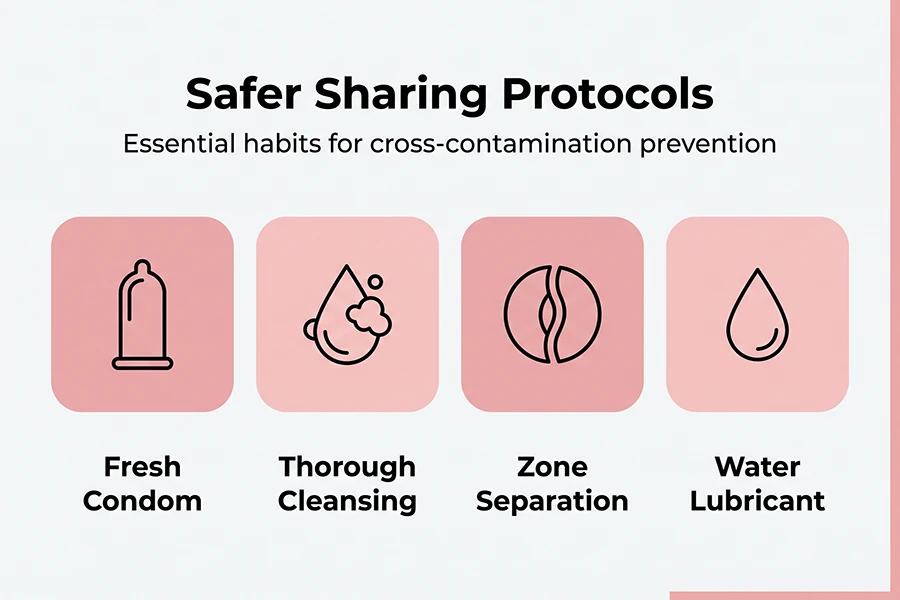
- Condoms add a barrier: Use a fresh condom for each person and when moving a toy between different anatomical areas.
- Follow the cleaning instructions: Whether a toy is waterproof or not, always follow the manufacturer’s recommended cleaning method.
- Know when to replace it: Cracks, cuts, deep scratches, or a deteriorating surface can make a toy harder to clean safely.
Is Sharing Sex Toys Dangerous At All?
Sharing a sex toy is not risk-free, especially when the same device moves from one person to another without being cleaned or covered. Sexual fluids and germs left on a toy can potentially spread certain STIs, including HPV, herpes, chlamydia, and gonorrhea. Some infections can also spread through skin-to-skin contact.
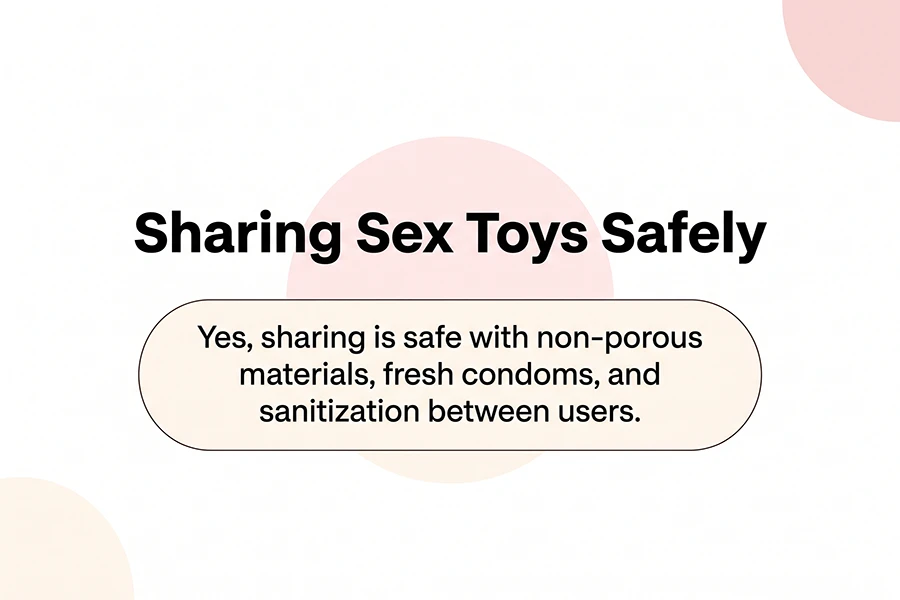
The good news is that the risk can be reduced. Cleaning the toy between users and using a new condom whenever a different person uses it are two practical ways to make sharing safer. It is also important to clean or change the condom before moving a toy from the anus to the vagina or mouth, because bacteria from the anus can cause vaginal infections.
Read More: 12 Sex Toys FAQs: Answers to the Most Common Questions About Sex Toys
How Vibrator Material Affects Safety
When clients ask me “can you share a sex toy safely?”, one of my first questions is: What is it made of? The material matters because some surfaces are easier to clean thoroughly than others, which can make a difference when a vibrator is shared between partners.
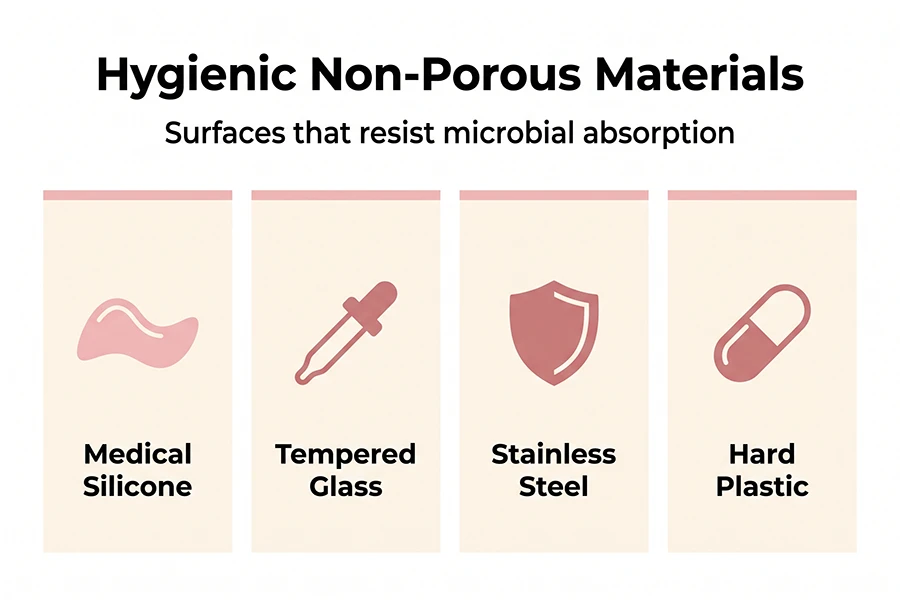
For toys used inside the body, non-porous materials such as 100% silicone, hard plastic, stainless steel, and break-resistant glass are generally easier to keep clean because they do not absorb germs. Porous or potentially porous materials, including jelly rubber, PVC, TPR, and some silicone blends, can be harder to clean thoroughly. A condom can add an extra barrier when sharing these toys.
The table below compares porous and non-porous sex toy materials, highlighting how they differ in cleaning, safety when shared, and common material examples.
| Feature | Porous / Potentially Porous | Non-Porous |
| Cleaning | More difficult to clean thoroughly | Easier to clean thoroughly |
| Sharing | Use a new condom for each user | Clean between users; a new condom adds protection |
| Examples | Jelly rubber, PVC, TPR, some silicone blends | 100% silicone, glass, stainless steel, hard plastic |
Important Clinical Reminder:
A sex toy can be a useful part of sexual wellness, but it should not be used to ignore persistent pain, irritation, or signs of infection. If you experience unusual discharge, sores, burning, significant pain, or other concerning symptoms, it is best to pause use and speak with a qualified healthcare professional. For ongoing pelvic floor concerns, a pelvic floor physical therapist or other appropriate specialist can provide individualized guidance.
Using a Condom Over the Vibrator as a Protective Layer
If you are still wondering, “can you share a sex toy safely if it is made of a softer, porous material?”, using a barrier method can help reduce the risk. Placing a condom over the toy creates a protective barrier that limits contact with bodily fluids and germs. This can lower the risk of passing certain infections between users, especially when the toy is difficult to clean thoroughly.

The simple rule is to use a new condom for each person and whenever the toy moves between different anatomical areas. For example, remove and discard the condom after one partner uses the toy, then put on a fresh one before another partner uses it. The same applies when moving a toy from the anus to the vagina or mouth.
A quick note on lubrication:
If you’re using a silicone sex toy, check the manufacturer’s instructions before using silicone-based lubricant. Silicone lube can react with some silicone toys and may damage the material. Water-based lubricant is generally a safe, versatile choice for silicone toys and condoms.
When NOT to Share a Vibrator
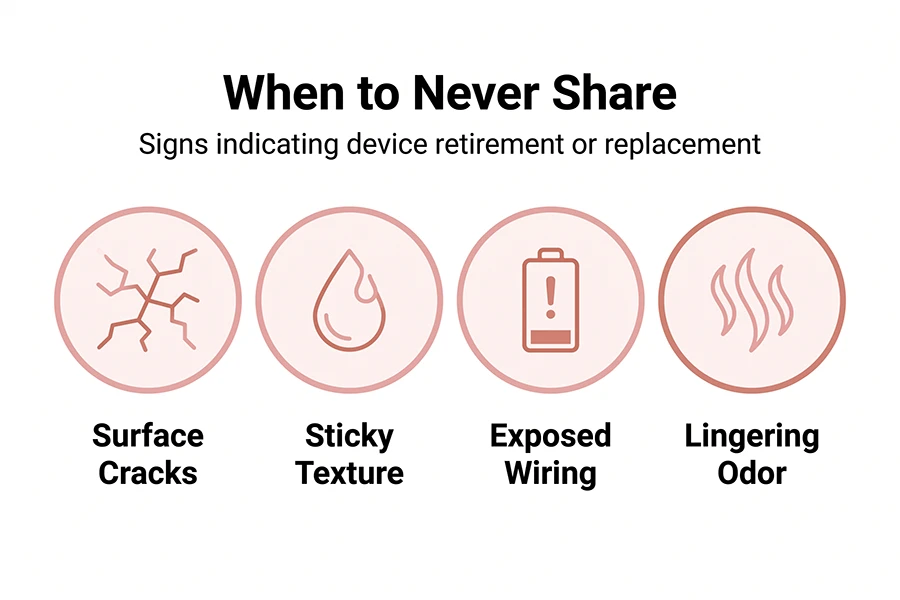
Even a non-porous toy should be replaced when its surface or internal components are no longer in good condition. I would avoid sharing—and consider replacing—the toy if you notice:
- Cracks, cuts, or deep scratches: Damaged surfaces can be harder to clean thoroughly.
- A sticky or deteriorating surface: Changes in texture may indicate that the material is breaking down.
- Exposed wiring or battery damage: These can create electrical or physical safety risks.
- Persistent unusual odor: If the toy still smells unusual after proper cleaning, check the manufacturer’s care instructions and consider replacing it.
Chloe’s Mailbox:
Client: “My partner and I are monogamous. Do we still need to clean our silicone wand between uses?”
Chloe: “Yes. Even when STI transmission isn’t a concern, I recommend cleaning a shared toy between users. This is especially important if the toy moves from the anus to the vagina or mouth. Washing it carefully—or changing the condom first—helps prevent bacteria from the anal area from being transferred to another part of the body.”
Alternative Solution: Having a Dedicated Toy for Everyone
While sharing a sex toy can be made safer with proper cleaning and barrier methods, sometimes the simplest option is for each partner to have their own. A dedicated toy removes the need to clean the device or change a condom between users and can make personal hygiene feel more straightforward.
It also gives each person the freedom to choose a toy based on their own comfort, ergonomic needs, and preferences. If you would rather keep your intimate wellness routine simple, you can order vibrator online from Selove and choose a personal device that fits your needs. For many couples, having separate toys is not about avoiding intimacy—it is simply an easy way to make hygiene more convenient while keeping personal wellness tools truly personal.
Final Thoughts
So, can you share a sex toy safely? Yes, you can make sharing considerably safer by choosing easy-to-clean, non-porous materials, cleaning the toy according to the manufacturer’s instructions, and using a new condom when appropriate. Sharing is not completely risk-free, but a few simple precautions can substantially reduce unnecessary exposure to germs and infections.
Caring for your wellness tools is simply another part of caring for your sexual health and your partner’s wellbeing. Whether you prefer barrier methods or having a personal toy, the best choice is the one that fits your comfort level and hygiene routine.
I would love to hear from you, have you found it easier to share devices using barrier methods, or do you prefer the peace of mind of having your own? Share your experiences and questions in the comments below!
References: healthline lioness plannedparenthood
Can I use rubbing alcohol to clean my vibrator?
It depends on the toy. Some manufacturers may allow alcohol-based cleaning, while others recommend only mild soap and water. Always follow the manufacturer’s cleaning instructions rather than assuming alcohol is safe for every material.
What happens if I use silicone-based lube on my silicone toy?
Some silicone-based lubricants can react with certain silicone toys and may damage or alter their surface. Check the manufacturer’s instructions before using silicone lubricant. Water-based lubricant is generally a versatile option for use with silicone toys and condoms.
How long can germs survive on a sex toy after it has been used?
There is no single timeframe that applies to every germ or sex toy. Survival depends on the type of microorganism, moisture, temperature, and the toy’s material. Rather than relying on time to make a toy safe, clean it according to the manufacturer’s instructions before another person uses it. A new condom can provide an additional barrier when sharing.