
Key Takeaways:
- Different stimulation, same nervous system: Clitoral and G-spot orgasms begin with stimulation in different areas, but both are processed through the same interconnected nervous system.
- No “better” orgasm: A clitoral orgasm vs vaginal orgasm is not a measure of sexual health, femininity, or sexual satisfaction, every body responds differently.
- Blended orgasms are common: Many women experience blended orgasms because internal and external stimulation often overlap during sexual activity.
- Knowledge improves experience: Understanding your anatomy, communicating with your partner, and using evidence-based techniques can make exploring either type of orgasm easier, more comfortable, and more enjoyable.
How Does an Orgasm Actually Happen?
Before comparing Clitoral vs G-Spot orgasms, it helps to understand what an orgasm actually is. From a clinical perspective, an orgasm is your body’s natural release of built-up physical and emotional tension. As sexual arousal increases, blood flow to the pelvic region rises, making the genital tissues more sensitive. At the peak of arousal, the pelvic floor muscles contract rhythmically without conscious control, while the brain releases hormones such as endorphins and oxytocin. Together, these responses help promote relaxation, reduce stress, and may contribute to better sleep and an overall sense of wellbeing.
What Is a Clitoral Orgasm and What Does It Feel Like?
When comparing Clitoral vs G-Spot orgasms, the clitoris is one of the most remarkable structures in the female body. Although only the small external glans is visible, most of the clitoris lies beneath the surface, with internal structures extending alongside the vaginal canal (the internal passage of the female genitals). A clitoral orgasm occurs through direct or indirect stimulation of this highly sensitive organ, which contains one of the highest concentrations of sensory nerve endings in the human body.
Many women describe a clitoral orgasm as a fast-building, highly focused sensation that reaches its peak relatively quickly. Because the stimulation primarily involves the external part of the clitoris, the climax often feels localized and is followed by a rapid release of physical tension, leaving the body feeling relaxed and refreshed.
What Is a G-Spot Orgasm and What Does It Feel Like?
The G-spot is generally described as a sensitive spongy region located about 2–5 cm (roughly 1–2 inches) inside the front wall of the vagina (the internal canal of the female genitals). Rather than being a separate anatomical structure or a distinct “button”, it is the internal area most commonly associated with vaginal orgasms.
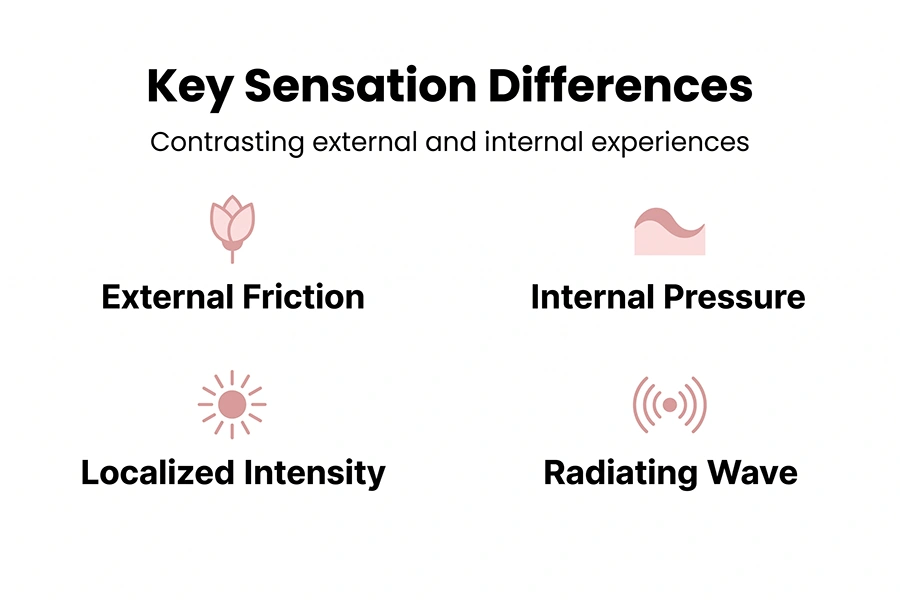
Many researchers now believe that so-called vaginal orgasms are closely connected to stimulation of the internal structures of the clitoris rather than an entirely separate physiological pathway. In my experience, women who enjoy this type of stimulation often describe the sensation as deeper, more gradually building, and spreading throughout the pelvic region rather than remaining concentrated in one spot. Compared with external clitoral stimulation, it may take longer to reach orgasm, but many women describe the experience as a slow, wave-like release that extends through the pelvis and is accompanied by a profound sense of relaxation.
Read More: Types of Orgasms: Discover the 10 Ways Your Body Can Reach Pleasure
Key Differences Between These Two Types of Orgasms
To make things as clear and accessible as possible, I have broken down the main differences between Clitoral vs G-Spot orgasms in the comparison table below:
| Feature | Clitoral Orgasm | G-Spot (Vaginal) Orgasm |
| Primary Sensation | Sharp, intense, and highly localized to the surface. | Deep, radiating, and experienced as a full-body wave. |
| Location of Stimulus | External (the visible glans and surrounding hood). | Internal (the sensitive zone on the front internal wall). |
| Time to Climax | Usually a faster and more direct build-up. | Generally requires a longer, sustained, and patient build-up. |
| Type of Touch Needed | Friction, gentle tapping, or direct, focused vibration. | Firm rhythmic pressure, a “come-here” motion, or deep internal vibrations. |

What Does a Blended Orgasm Mean?
A blended orgasm involves both external clitoral and internal vaginal stimulation at the same time. Because the internal structures of the clitoris extend alongside the vaginal canal, these forms of stimulation can activate overlapping nerve pathways. Many women describe blended orgasms as combining the focused intensity of clitoral stimulation with the deeper sensations of internal stimulation, often making the experience feel more intense or longer-lasting. Like other orgasms, they may also promote relaxation, reduce stress, and support overall wellbeing.
How to Experience a Clitoral Orgasm More Easily?
If you’re exploring the external side of Clitoral vs G-Spot orgasms, the most important factors are relaxation, arousal, and discovering the type of stimulation that feels most comfortable for your body.
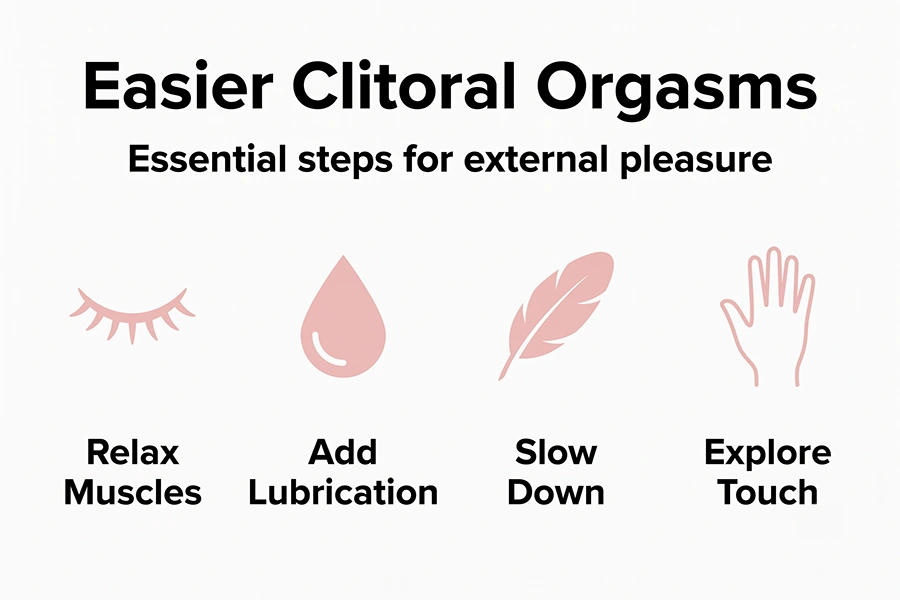
- Relaxation comes first: Stress can make it harder to become fully aroused. Slowing down, taking deep breaths, and allowing your pelvic floor muscles to relax before stimulation can enhance comfort and sexual response.
- Use lubrication when needed: Adequate lubrication reduces friction, improves comfort, and can help prevent dyspareunia (pain during sexual activity). If natural lubrication is limited, a high-quality water-based lubricant is often the best choice.
- Explore what feels best: Everybody responds differently. Experimenting with different types of touch, pressure, speed, and angles can help you identify the sensations that are most pleasurable and comfortable for you.
How to Experience a G-Spot Orgasm More Easily?
Exploring the internal side of Clitoral vs G-Spot orgasms often requires patience because internal stimulation feels different from external clitoral stimulation and may take longer to build.
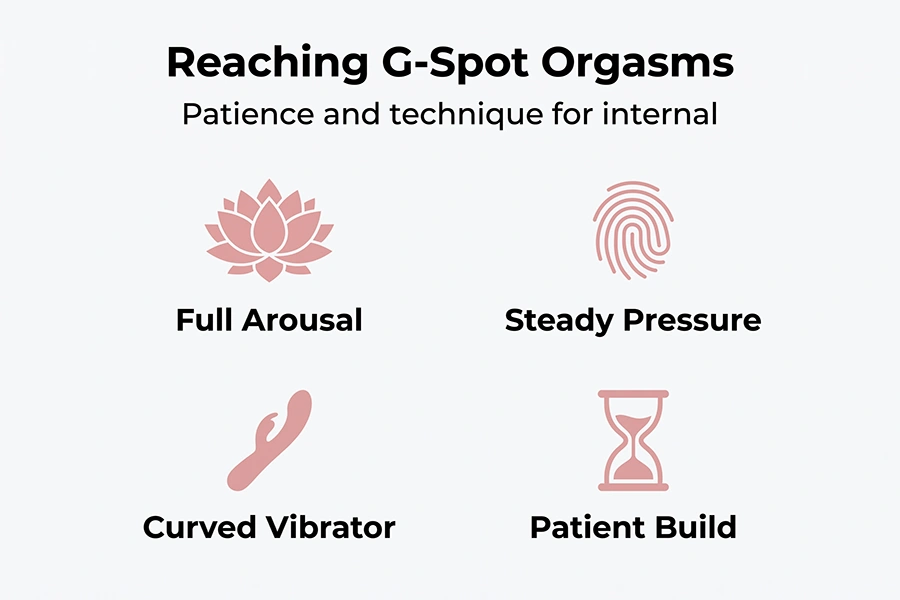
Begin with Full Arousal
As arousal increases, blood flow to the pelvic tissues also increases, making the sensitive area on the front vaginal wall easier for many women to identify. For this reason, I usually recommend starting with external stimulation before exploring internal stimulation.
Try the “Come Here” Motion
Using one or two fingers, apply gentle but steady pressure against the front wall of the vagina with a slow “come here” motion. Many women find this technique more comfortable than rapid or repetitive movements.
Consider Ergonomic G-Spot Vibrators
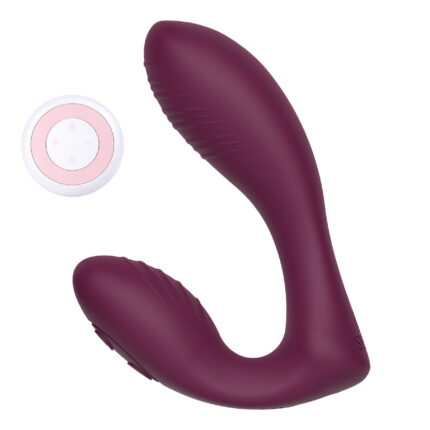
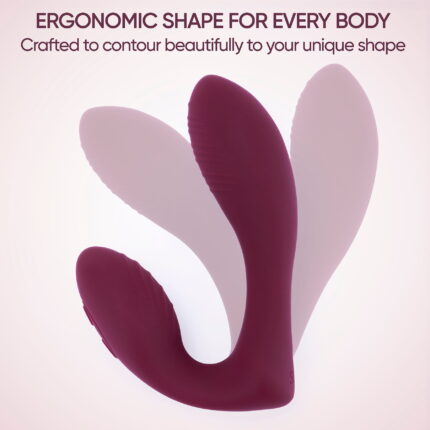
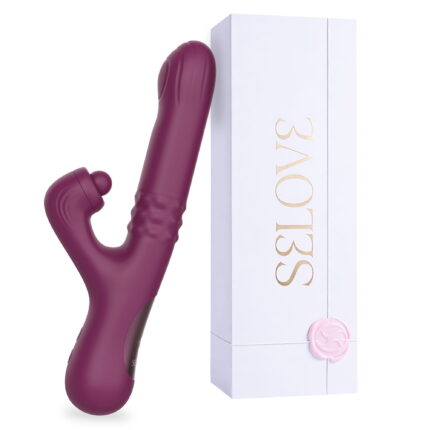
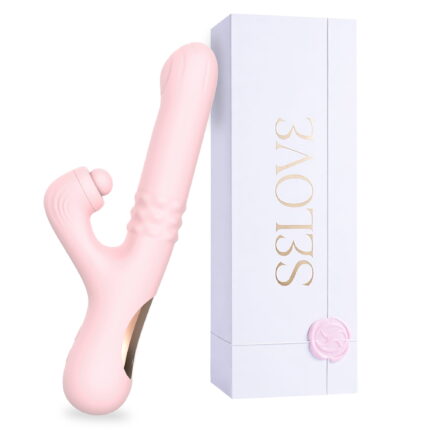
Some women find that specially designed G-spot vibrators provide more consistent internal stimulation than fingers alone. If you decide to use one, I recommend choosing a model made from medical-grade silicone (a non-porous, body-safe, hypoallergenic material) with a gently curved shape designed to reach the front vaginal wall comfortably. Waterproof models are also easier to clean and maintain, making them a practical choice for long-term self-care.
Important Clinical Reminder:
G-spot vibrators are wellness tools intended to support sexual wellbeing and self-exploration. They are not medical treatments. If you experience persistent pain, bleeding, recurrent infections, or other concerning symptoms, consulting a healthcare professional or a pelvic floor physiotherapist should be your first priority.
Read More: Best Vibrator for Orgasm: 5 Top-Rated Toys That Deliver
Which Orgasm is “Better” or “More Right”?
Myth vs. Fact from Chloe’s Desk
- Myth: If a woman cannot reach orgasm through vaginal penetration alone, it means something is physically or psychologically wrong with her.
- Fact: Research consistently shows that most women need direct or indirect clitoral stimulation to reach orgasm, and many do not orgasm from vaginal penetration alone. This is a normal variation in anatomy and sexual response, not a sign of dysfunction.
When discussing Clitoral vs G-Spot orgasms, it’s important to let go of the idea that one type is more “real” or desirable than another. Many women worry their experiences aren’t “normal,” especially when they don’t match media portrayals or common myths. In reality, there is no hierarchy of pleasure, and scientific evidence does not support judging sexual health, femininity, or relationship quality by the type of orgasm a woman experiences. Every woman’s anatomy and sexual response are unique, some primarily experience clitoral orgasms, others enjoy internal stimulation, and many experience both. All of these experiences are normal and equally valid.
Final Thoughts
Understanding Clitoral vs G-Spot orgasms isn’t about deciding which type is “better” it’s about discovering how your own body responds to different kinds of stimulation.
If you have questions or experiences you’d like to share, I’d love to hear from you in the comments.
References: Healthline Sassiest
Does age change the way clitoral or G-spot orgasms feel?
It can. Hormonal changes, childbirth, menopause, medications, and overall health may influence sensitivity and arousal over time. However, many women continue to experience satisfying orgasms throughout their lives with the right stimulation and communication.
Can sex toys help if I’ve never experienced a G-spot orgasm?
For some women, yes. Ergonomically designed G-spot vibrators can provide more consistent internal stimulation than fingers alone.
Why do I suddenly find it harder to orgasm?
Stress, fatigue, hormonal changes, medications, and health factors can affect orgasm. If the change is persistent, consider discussing it with a healthcare professional.