

Key Takaways:
- Commonly described types: Clinical literature commonly describes several types of female orgasms, each associated with different forms of stimulation and individual experiences.
- Shared neurological pathways: Although physical triggers differ, many orgasm experiences involve overlapping neural pathways and brain reward systems.
- Self-exploration matters: Learning what feels pleasurable for your body can support sexual well-being, as preferences and responses vary from person to person.
What Exactly Is an Orgasm and What Happens in the Body?
Before exploring the different Types of Orgasms, it’s important to understand what an orgasm actually is. An orgasm is the peak of the sexual response cycle, when the brain, nervous system, pelvic floor muscles, and reproductive organs work together to create rhythmic muscle contractions and a feeling of release. During arousal, increased blood flow and muscle tension gradually build until they reach this peak response.
In my clinical practice, I often remind women that understanding how their body naturally responds is far more important than trying to achieve one specific orgasm. That knowledge makes it much easier to understand the different types of female orgasm and appreciate why every woman’s experience is unique.
Are There Really Different “Types” of Orgasms, or Do They All Come From the Same Mechanism?
The answer is both. Different types of orgasms may be triggered by different forms of stimulation, but research shows that many of these experiences share similar pathways in the brain and nervous system rather than being completely separate processes. During orgasm, the brain, nerves, and pelvic floor muscles work together to create the body’s response.

The clitoris (the main organ involved in sexual pleasure) is much larger than the small external part that is visible. Its internal structures extend around the vaginal area, which may help explain why different types of orgasms can feel different even though they share some of the same nerve pathways. Scientists continue to study how different areas of the body contribute to orgasm.
Myth vs. Fact:
- Myth: Internal orgasms are the “mature” or “correct” goal every woman should strive for.
- Fact: Most women reach orgasm more consistently through clitoral stimulation, either alone or combined with penetration. There is no “best” type of orgasm—every healthy response is completely normal.
Read More: Clitoral vs G-Spot orgasms: What’s the Real Difference & How to Experience Both?
10 Commonly Described Types of Orgasms
The following are the 10 most commonly recognized types of orgasms described in clinical literature. Although these experiences are grouped into different categories, many share overlapping neurological pathways.

Clitoral Orgasm
A clitoral orgasm is the most common type of female orgasm and is triggered primarily by stimulation of the clitoris. The external glans of the clitoris contains one of the highest concentrations of sensory nerve endings in the body. Clitoral orgasms are often described as sharp, intense sensations that are primarily localized around the vulva (the external female genitalia).
Vaginal Orgasm
A vaginal orgasm is achieved through penetration of the vaginal canal. It is thought to involve stimulation of the internal clitoral network, pelvic nerves, and surrounding tissues. Compared with clitoral orgasms, the sensation is often described as deeper and more diffuse, although experiences vary widely.
G-spot Orgasm
The G-spot is an erogenous area located on the anterior (front) wall of the vagina. Stimulating this spongy tissue may lead to orgasm in some women and can sometimes be associated with female ejaculation (the release of fluid from the Skene’s glands). It often requires deep, rhythmic pressure.
Read More: What Is G-Spot and How to Stimulate It Safely?
Blended Orgasm
A blended orgasm occurs when multiple erogenous zones; most commonly the external clitoris and the internal G-spot, are stimulated simultaneously. Many women describe blended orgasms as more intense because multiple erogenous areas are stimulated simultaneously, although individual experiences vary considerably.
Cervical / C-spot Orgasm
The cervix (the lower, narrow end of the uterus that connects to the vagina) has its own distinct nerve pathways connected to the vagus nerve. Some researchers suggest that deep cervical stimulation may activate additional neural pathways, including those involving the vagus nerve, although more research is needed. Of course, experiences vary widely between individuals.
Nipple and Other Erogenous Zones (Neck, Ears, Behind Knees)
The brain can map sexual pleasure from various parts of the body. For some women, nipple stimulation can activate brain regions that also respond to genital stimulation, potentially contributing to orgasm. Other highly sensitive areas include the neck, inner thighs, and ears.
Coregasm (Exercise-Induced Orgasm)
Although uncommon, some women experience exercise-induced orgasms, known as “coregasms,” during intense core workouts like leg raises or heavy lifting. These activities engage the pelvic floor and abdominal muscles, which may lead to orgasm without direct genital stimulation.
Sleep Orgasm
Often referred to as nocturnal orgasms, these occur during the REM cycle of sleep when blood flow to the pelvic region naturally increases. You might wake up in the middle of a climax, which is a completely healthy sign of your body’s autonomous functioning.
Anal Orgasm
The anus is surrounded by a dense concentration of nerve endings connected to the pelvic floor muscles. In women, anal stimulation may also indirectly affect the posterior vaginal wall and internal structures of the clitoris, which may contribute to orgasm for some individuals depending on their anatomy and sensitivity.
Multiple Orgasm
Unlike men, women do not have a mandatory refractory period (the recovery phase after a climax where further stimulation is uncomfortable). Some women can experience sequential orgasms back-to-back if stimulation continues, though this varies greatly depending on individual sensitivity and libido (the psychological desire for sexual activity).
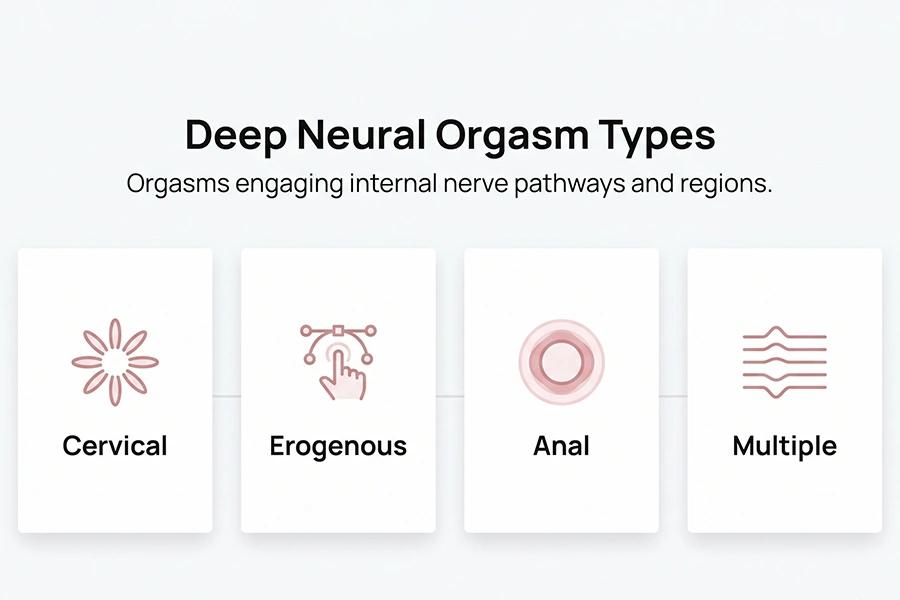
The table below summarizes the most commonly described types of orgasms, the primary anatomical areas involved, and the typical sensations reported in clinical literature.
| Orgasm Type | Primary Area Involved | Typical Experience |
| Clitoral | Clitoris and external vulvar tissues | Often described as localized, intense sensations around the vulva |
| Vaginal | Internal clitoral network, vaginal tissues, and pelvic nerves | Often described as deeper and more diffuse sensations |
| G-Spot | Anterior vaginal wall and surrounding tissues | May involve deeper sensations and orgasm for some individuals |
| Blended | Multiple erogenous areas, commonly clitoris and internal stimulation | May feel more intense due to stimulation of multiple areas simultaneously |
| Cervical / C-Spot | Cervix and surrounding pelvic nerve pathways | Experiences vary widely; some report deeper sensations |
| Nipple and Other Erogenous Zones | Nipples and other sensitive body areas such as neck and inner thighs | May involve brain responses similar to genital stimulation |
| Coregasm | Pelvic floor and abdominal muscles during exercise | Exercise-induced orgasm reported by some individuals during intense core engagement |
| Sleep Orgasm | Nervous system responses during sleep, often during REM sleep | Occurs during sleep without conscious stimulation |
| Anal | Anal tissues, pelvic floor, and nearby sensitive structures | May contribute to orgasm for some individuals depending on anatomy and sensitivity |
| Multiple Orgasm | Multiple cycles of orgasmic response | Some individuals can experience more than one orgasm during a sexual encounter |
Overview of the 10 Commonly Described Types of Orgasms, Primary Anatomical Regions, and Reported SensationsWhich Type of Stimulation is Best Suited for Which Type of Orgasm?
Different types of orgasms are often associated with different forms of stimulation. Clitoral orgasms are most commonly linked to direct or indirect clitoral stimulation, while vaginal and blended orgasms may involve penetration combined with clitoral stimulation.
Although manual stimulation is effective for many people, some choose to buy a vibrator made from medical-grade silicone to explore different types of stimulation. A G-spot vibrator with a curved tip is commonly used to stimulate the area often referred to as the G-spot, while a wand vibrator is often preferred for broader external clitoral stimulation. Ultimately, the most effective approach depends on individual anatomy, sensitivity, and personal preference.
Read More: Best Vibrator for Orgasm: 5 Top-Rated Toys That Deliver

Clinical Reminder: Intimate wellness products are designed to support sexual well-being and are not medical treatments. If sexual activity is consistently painful or accompanied by symptoms such as dyspareunia, infections, bleeding, or other persistent concerns, consult a qualified healthcare professional or a pelvic floor physical therapist for evaluation.
Final Thoughts
While exploring the different types of orgasms can be a beautiful way to connect with yourself, it should never become a source of stress or a checklist to complete. True sexual wellbeing is about body literacy; understanding your rhythms, communicating your needs, and enjoying the journey of self-discovery without judgment.
If you have any questions or would like to share your own self-care journey, please feel free to leave a comment below.
References: helloclue verywellhealth
Can every woman experience multiple orgasms?
Many women can experience multiple orgasms, but it varies depending on individual physiology and sensitivity.
Why do I sometimes feel numbness instead of pleasure when using tools?
High-intensity or prolonged stimulation may temporarily reduce sensitivity. Adjusting the intensity or taking breaks may help.
Is it normal if I have never experienced a G-spot climax?
Yes. G-spot sensitivity varies greatly, and many healthy women never experience this type of orgasm.